
IT Business Solutions Strengthen Customer Data Security
Every time a customer shares their name, email, or payment details with your business, they are placing a small amount of trust in your hands. If that trust is broken through a data breach, it rarely comes back easily. This is exactly why IT Business Solutions Strengthen Customer Data Security in ways that go far beyond a simple antivirus program. Today’s businesses face phishing attempts, ransomware, weak passwords, and misconfigured systems on a daily basis. Therefore, protecting customer information is no longer optional; it is a core part of running a trustworthy, modern business.
Why Customer Data Security Matters More Than Ever
Customers today are far more cautious about who they share information with. A single breach can damage years of built-up trust within hours. Beyond reputation, businesses also face financial penalties, legal consequences, and lost revenue when data protection fails.
Consequently, strong IT business solutions are not just a technical upgrade; they are a business survival strategy. Companies that invest early in security typically recover faster from incidents and retain customer confidence more easily than those that treat security as an afterthought.
How IT Business Solutions Strengthen Customer Data Security
IT business solutions bring structure, automation, and expert oversight to what would otherwise be a scattered security effort. Instead of relying on outdated spreadsheets or manual checks, businesses can use integrated tools that monitor threats, manage access, and respond to incidents in real time.
For example, managed IT providers often combine firewalls, encryption, monitoring, and employee training into a single coordinated system. As a result, security gaps that individual tools might miss are caught earlier, reducing the overall risk of a breach.
Additionally, these solutions give business owners visibility they simply cannot achieve on their own. Instead of hoping nothing goes wrong, teams receive alerts the moment suspicious activity appears, allowing them to act before a small issue becomes a major incident. This shift from reactive cleanup to proactive prevention is one of the biggest advantages modern IT business solutions offer over traditional, piecemeal security setups.
Building Strong Passwords and Authentication
Weak passwords remain one of the easiest ways criminals gain access to sensitive systems. Fortunately, simple habits can close this gap quickly.
- Require uppercase letters, numbers, and symbols in every password.
- Set expiration policies so passwords are refreshed periodically.
- Use password managers to store credentials safely.
- Monitor for unusual login attempts across accounts.
The Power of Two-Factor Authentication
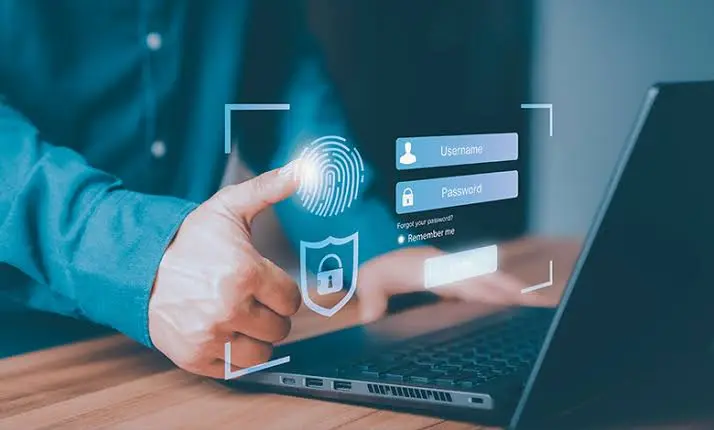
Two-factor authentication, often shortened to 2FA, adds a second layer of protection beyond the password itself. Even if a password is stolen, the attacker still needs a secondary code or device to gain entry. Because of this extra step, 2FA significantly lowers the chances of unauthorized access, even when credentials are compromised.
Securing Networks and Systems Against Intrusion
A secure network acts as the first line of defense for any business. Without it, sensitive customer data becomes an easy target for cybercriminals.
To strengthen network security, businesses should:
- Install firewalls to block unauthorized traffic.
- Apply software updates consistently to patch known vulnerabilities.
- Use SSL or TLS encryption when transmitting sensitive information online.
- Run updated antivirus software to catch malware before it spreads.
Since cyber threats evolve constantly, network security cannot be a one-time setup. It requires ongoing attention from either an internal IT team or a trusted managed service provider.
Encrypting Sensitive Data at Every Stage
Encryption converts readable data into a coded format that only authorized users can unlock. Even if attackers manage to steal encrypted files, the information remains unreadable without the correct key.
Effective encryption practices include:
- Using proven algorithms such as AES for strong protection.
- Storing encryption keys securely and limiting who can access them.
- Reviewing encryption methods regularly to keep pace with new threats.
- Encrypting data both at rest and while it moves between systems.
Because customer data often travels between devices, servers, and cloud platforms, encryption should be applied at every stage of that journey, not just when the data is stored.
Controlling Who Can Access Customer Data
Not every employee needs access to every piece of customer information. Limiting access reduces the chances of accidental exposure or misuse.
Role-Based Access Controls
Role-based access controls, commonly known as RBAC, ensure employees only see the data necessary for their specific job. This approach naturally shrinks the number of people who could accidentally or intentionally expose sensitive information.
Additional access control practices include:
- Reviewing user permissions on a regular schedule.
- Immediately revoking access when employees leave the company.
- Monitoring who accesses customer records and when.
- Requiring multi-factor authentication before sensitive data is released.
Backing Up Data the Right Way
Data backups are often overlooked until something goes wrong, but by then, it is too late to fix a broken process. A reliable backup strategy ensures customer data can be restored quickly after a breach, hardware failure, or accidental deletion.
Businesses should aim to:
- Schedule backups based on how frequently data changes.
- Store copies offsite so a single disaster cannot wipe out everything.
- Test backups regularly to confirm the data restores correctly.
- Encrypt backup files just as thoroughly as live data.
Without regular testing, a backup can quietly fail for months without anyone noticing, which defeats its entire purpose. In fact, many businesses only discover a broken backup process during an actual emergency, when it is far too late to fix the gap. Scheduling routine restoration tests, even quarterly, removes this blind spot entirely.
Training Employees and Educating Customers
Technology alone cannot stop every threat. People are often the deciding factor between a prevented attack and a costly breach.
Employees should receive ongoing training covering phishing recognition, safe password habits, and how to report suspicious activity. Meanwhile, keeping customers informed about how their data is protected builds confidence and reduces confusion if an incident ever occurs.
Businesses that treat training as a recurring habit, rather than a one-time onboarding task, are far better prepared when real threats appear.
Comparing Common Data Protection Methods
| Protection Method | Primary Purpose | Best Suited For |
|---|---|---|
| Encryption | Makes stolen data unreadable | All sensitive data, at rest and in transit |
| Access Controls (RBAC) | Limits who can view data | Businesses with multiple employee roles |
| Two-Factor Authentication | Adds a login security layer | Protecting accounts from stolen passwords |
| Regular Backups | Restores data after loss | Recovery from breaches or system failure |
| Employee Training | Reduces human error | Preventing phishing and social engineering |
As shown above, no single method covers every risk on its own. Instead, businesses achieve the strongest protection by layering these methods together.
Common Mistakes That Weaken Data Security
Even well-meaning businesses fall into avoidable traps that leave customer data exposed, often without realizing it until an incident forces the issue into the open. Watch out for these common mistakes:
- Delaying software updates, leaving known vulnerabilities unpatched.
- Granting broad data access instead of role-specific permissions.
- Skipping backup testing until a real emergency forces the issue.
- Treating employee training as a formality instead of an ongoing priority.
- Ignoring compliance requirements until an audit or incident forces action.
Avoiding these pitfalls requires consistent effort, but the payoff is a security posture that actually holds up under pressure.
Staying Compliant While Protecting Data
Many industries require businesses to follow specific data protection regulations, such as GDPR or CCPA. Meeting these requirements is not just about avoiding fines; it also demonstrates to customers that their information is being handled responsibly.
Working with experienced IT business solutions providers can simplify compliance, since these experts stay current with changing regulations and can adjust security practices accordingly. This is particularly valuable for smaller businesses that lack a dedicated legal or compliance team, since staying on top of shifting regulatory requirements alone can quickly become overwhelming.
Final Thoughts on Strengthening Customer Data Security
Protecting customer data is an ongoing responsibility, not a single project with a finish line. By combining strong passwords, secure networks, encryption, access controls, reliable backups, and consistent training, businesses can significantly reduce their risk of a breach. Ultimately, investing in the right IT business solutions today builds the kind of trust that keeps customers coming back tomorrow.
Frequently Asked Questions
What is customer data security?
Customer data security refers to the practices, tools, and policies businesses use to protect customer information from unauthorized access, breaches, and misuse. It includes encryption, access controls, backups, and compliance with data protection regulations.
What causes most customer data breaches?
Most breaches result from phishing attacks, weak or reused passwords, unpatched software, misconfigured systems, and simple human error, rather than highly advanced hacking techniques.
How can IT business solutions improve data security?
IT business solutions combine encryption, monitoring, access control, and employee training into one coordinated system, helping businesses catch vulnerabilities early and respond to threats before they escalate into full breaches.