
Conch Piercing Infection Signs You Should Never Ignore
A conch piercing can look stylish and unique, but the healing process sometimes becomes stressful when pain, swelling, or redness suddenly appear. Many people panic the moment their piercing feels sore because they immediately think it is infected. However, not every irritated piercing is actually dangerous.
Some symptoms are part of normal healing, while others can signal a real infection that should never be ignored. Understanding the difference between mild irritation and a serious infection helps prevent unnecessary fear and protect your ear from long-term damage.
Cartilage piercings heal more slowly than regular lobe piercings, which means even small problems can become worse if ignored for too long. People who understand proper cleaning habits and healing precautions early usually reduce the risk of irritation and infection during recovery. Simple daily piercing care habits should always be followed consistently.
Why Conch Piercings Are More Sensitive During Healing
The conch area is made of thick cartilage with less blood flow compared to the soft earlobe. Because of this, healing usually takes longer, and irritation happens more easily. Small amounts of swelling, tenderness, or dryness are common during the early healing period.
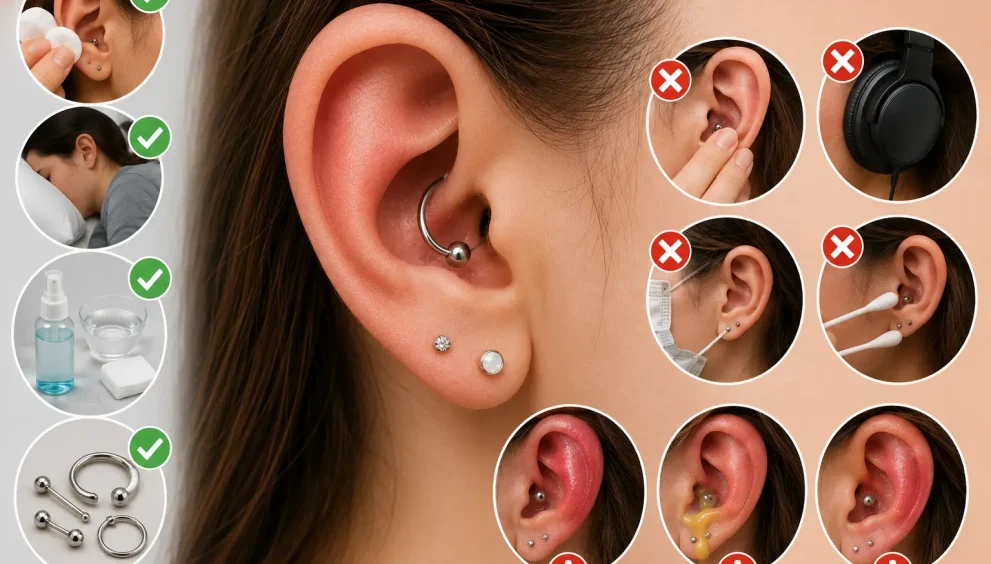
However, the location of a conch piercing also makes it easier to accidentally irritate. Headphones, masks, pillows, hair brushing, and tight jewelry can repeatedly put pressure on the area. As a result, many people mistake irritation for infection.
The most important thing is to watch how the symptoms behave over time. Mild irritation usually improves gradually, while infection often becomes more aggressive.
Early Conch Piercing Infection Signs
One of the biggest mistakes people make is ignoring early warning signs because they assume the problem will disappear on its own. In reality, cartilage infections can spread deeper into the tissue if they are left untreated.
Some of the most common conch piercing infection signs include:
- Strong redness around the piercing
- Swelling that increases instead of improving
- Pain that becomes more intense each day
- Thick yellow or green discharge
- A foul smell is coming from the piercing
- Heat spreading around the ear
- Severe tenderness when touched
These symptoms are different from normal healing irritation because they continue getting worse instead of calming down.
Difference Between Irritation and Infection
Many conch piercings become irritated at some point during healing. Irritation is common and usually occurs when something keeps rubbing against the jewelry or skin.
An irritated piercing may have:
- Slight redness
- Mild swelling
- Small irritation bumps
- Light soreness
- Clear or pale yellow fluid
These symptoms are usually manageable with proper aftercare and reduced pressure on the area.
An infected piercing behaves differently. The pain often feels sharper and stronger. The skin may appear extremely red or swollen, and the discharge becomes thicker and darker. In some cases, the swelling spreads beyond the piercing area into the outer ear.
If the ear feels hot to the touch or develops a strong odor, infection becomes much more likely.
Why Ignoring Infection Signs Can Become Dangerous
A conch piercing infection should never be ignored because cartilage infections can become serious much faster than regular ear piercings. Since cartilage has lower blood circulation, the body struggles more to fight bacteria in that area.
If an infection keeps spreading, it can damage the cartilage tissue itself. In difficult situations, untreated infections may change the shape of the ear or require medical treatment with antibiotics.
This is why worsening symptoms should always be taken seriously instead of being treated as “normal healing.”
Common Causes of Conch Piercing Infections
Several daily habits increase the risk of infection without people realizing it. One of the most common causes is touching the piercing with unwashed hands. Bacteria from fingers can easily transfer into the healing area.
Many people also mistake normal cartilage soreness for infection, especially during the first healing stages. Understanding what level of piercing discomfort is actually normal during recovery can help reduce unnecessary panic and improve aftercare decisions.
Other common causes include:
- Sleeping directly on the piercing
- Wearing dirty headphones or earbuds
- Using harsh cleaning products
- Rotating the jewelry too often
- Changing jewelry too early
- Wearing low-quality metal jewelry
- Friction from masks or clothing
Sometimes irritation begins first, and then bacteria enter the damaged skin later. This is why persistent irritation should also be handled carefully.
Signs That Mean You Should See a Doctor
Some symptoms should never be treated at home alone. If the infection becomes severe, professional medical care may be necessary.
You should seek medical help if you notice:
- Green discharge or pus
- Fever or chills
- Rapid swelling
- Severe throbbing pain
- Spreading redness around the ear
- Jewelry is becoming trapped in swollen skin
- Ear shape is starting to change
These symptoms can indicate a deeper cartilage infection that may require antibiotics or professional treatment.
How to Calm an Irritated Conch Piercing Safely
Many people accidentally make irritation worse because they panic and over-clean the piercing. Strong chemicals, alcohol, or excessive touching can damage the healing tissue even more.
Instead, focus on gentle care:
- Clean the area with sterile saline solution
- Pat dry using clean tissue or gauze
- Avoid sleeping on the pierced side
- Keep headphones away during healing
- Do not twist or rotate the jewelry
- Wash your hands before touching the piercing
Consistency matters more than aggressive cleaning. In many cases, irritation improves once the source of pressure or friction is removed.
Choosing Better Jewelry Can Reduce Problems
Jewelry quality plays a major role in healing success. Cheap metals sometimes trigger allergic reactions that look very similar to infections. Redness, itching, and swelling can appear when the body reacts badly to nickel or poor-quality materials.
Many professional piercers recommend implant-grade titanium because it is lightweight, biocompatible, and less likely to irritate healing cartilage.
Jewelry sizing also matters. Posts that are too tight can trap swelling, while overly long jewelry may move excessively and keep irritating the piercing channel.
Healing Time and What to Expect
A conch piercing does not heal overnight. Even if the outside looks calm, the inner tissue may still be healing for months. Mild soreness can occasionally return if the area gets bumped or pressured during recovery. Most conch piercings need several months before they fully stabilize.
Understanding how swelling, tenderness, and crust formation change over time makes the healing process less stressful. A week-by-week recovery breakdown can help people identify what feels normal during each stage. During that time, patience and proper aftercare are extremely important.
The key difference is progress. Healing piercings slowly improve, while infected piercings usually become more painful, swollen, and inflamed over time.
Final Thoughts
A conch piercing infection can start with symptoms that seem small at first, but ignoring them may lead to bigger complications later. Mild irritation is common during cartilage healing, especially when pressure, jewelry movement, or friction constantly disturb the area. However, severe redness, spreading heat, thick discharge, and worsening pain should never be ignored.
Paying attention to early warning signs gives you the best chance to protect your piercing and avoid long-term damage. Gentle aftercare, quality jewelry, and quick action when symptoms worsen can make the healing process much safer and less stressful.