

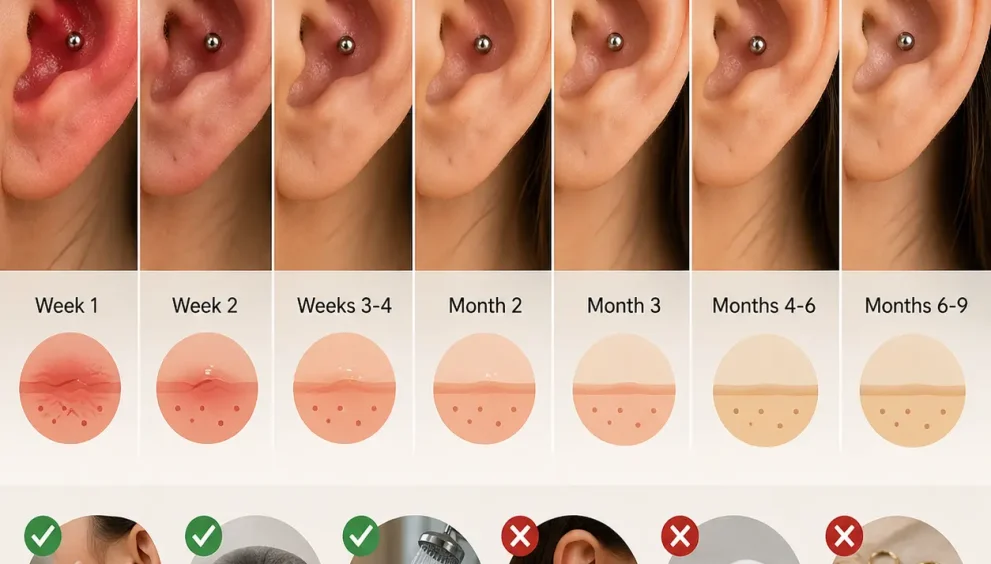
Conch Piercing Healing Time: Week by Week Recovery
Getting a conch piercing feels exciting in the moment, but the real journey starts after the jewelry is in place. Many people assume cartilage piercings heal the same way as a regular lobe piercing, yet the conch sits in a thicker part of the ear, which means recovery follows a slower and more delicate timeline. That is exactly why understanding conch piercing healing time week by week can save you from frustration, panic, and common mistakes.
Instead of wondering every few days whether swelling is normal or whether tenderness should already be gone, it helps to know what your ear is supposed to experience at each stage. While general aftercare habits always matter, a week-by-week recovery approach gives you a clearer picture of what is happening beneath the surface. In fact, many of the daily habits discussed in detailed conch piercing aftercare resources become much easier to follow when you understand why each healing phase demands patience.
Why Conch Piercing Healing Takes Longer Than Expected
A conch piercing passes through dense ear cartilage rather than soft skin, which is why healing rarely moves as quickly as people expect. Because cartilage receives less blood flow, your body repairs this area more gradually and with greater sensitivity to pressure, friction, and daily disturbance. This slower circulation often makes the outer ear appear calm before the inner tissue is fully stable.
As a result, many people assume the piercing is healed within a few weeks and begin touching, rotating, or changing jewelry too early. Building safer daily habits from the start and understanding which small aftercare mistakes usually trigger swelling can significantly reduce those setbacks, especially when you already know the most effective ways to support smoother healing at home. However, conch healing is not just about surface appearance.
Even when redness fades, the inner channel is still rebuilding collagen, reducing inflammation, and adjusting around the jewelry. Therefore, true healing often stretches across several months, and the week-by-week view matters because each stage comes with its own discomforts, improvements, and hidden risks.
Week 1: Swelling, Heat, and Constant Awareness
The first week is the body’s inflammatory response. Your ear recognizes the puncture as trauma, so swelling, warmth, throbbing, and mild redness are completely expected. Some people also notice a slight pressure sensation when moving their jaw or talking on the phone. This can feel alarming, but in most cases, it is simply the tissue reacting to the new wound.
During these first days, sleeping becomes awkward because even slight pressure can trigger pain. In addition, hair, headphones, and clothing may suddenly feel like enemies. This is the week where people become overly aware of their ear because the piercing reminds them it exists every few minutes.
The smartest approach here is minimal disturbance. Clean gently with saline, avoid touching, and do not test the jewelry by moving it. Although the piercing looks simple from the outside, the tissue is highly sensitive during this phase.
Week 2: Tenderness Begins, but Sensitivity Stays High
By the second week, the intense throbbing usually starts to settle. Swelling may reduce slightly, which often tricks people into thinking the hardest part is over. Yet this stage still demands caution because the wound is open internally.
You may notice:
- Light crust formation,
- Occasional itching,
- Random sharp tenderness if bumped,
- Mild, clear, or pale discharge.
These signs usually indicate the body is producing healing fluid. At this point, the piercing can seem fine one hour and irritated the next. That inconsistency is normal. Cartilage piercings are known for reacting dramatically to minor pressure.
Therefore, week two is less about visible pain and more about avoiding setbacks. One accidental snag from a towel or sleeping on the wrong side can restart swelling.
Weeks 3 to 4: The “Looks Better but Isn’t Better” Stage
This period is one of the most misunderstood parts of conch piercing healing time. Outwardly, the ear often appears calmer. Redness fades, crusting decreases, and many people report less daily soreness. Because of this, they assume healing is nearly complete.
That assumption causes trouble.
Internally, the piercing channel is still fragile and can easily become irritated. The tissue is trying to create a stable tunnel around the jewelry, and any twisting, jewelry changes, or constant touching interrupts that process. Even though the piercing may feel “almost normal,” pressure can still trigger inflammation overnight.
Moreover, this is the stage when impatience usually begins. People want to wear cute hoops, sleep comfortably, or stop cleaning regularly. Unfortunately, reducing care too early often extends recovery instead of shortening it.
Month 2: Less Pain, More Hidden Vulnerability
By the second month, most conch piercings stop feeling like a fresh wound. You may no longer think about it every hour, and casual movement around the ear becomes easier. Nevertheless, this is not a green light to relax completely.
Cartilage healing tends to become deceptive here. The piercing may only hurt when bumped, which makes users believe it is stable. Yet internal tissue remains thin and reactive. Sudden swelling can still happen after:
- using earbuds,
- sleeping on that side,
- changing shampoo products,
- catching hair around jewelry.
In other words, month two is quieter but not secure. Many healing delays begin during this period because people mistake reduced pain for full recovery.
Month 3: A More Comfortable Routine Starts Forming
Around the third month, daily tenderness generally decreases in a noticeable way. Cleaning becomes easier, crusting slows down, and the ear begins to feel more like part of your routine rather than a constant concern. This is often the first phase where users gain confidence.
Still, confidence should not turn into carelessness.
While the piercing is now stronger than before, the inner cartilage tunnel is still maturing. This means irritation bumps, sudden soreness, or minor swelling can still appear if the ear experiences friction. The body is essentially strengthening the channel, but it has not fully sealed and settled.
Consequently, consistency remains the winning factor. Gentle saline cleaning and pressure avoidance should continue even if the piercing looks calm.
Months 4 to 6: Visible Healing Meets Internal Adjustment
This middle recovery window is where many conch piercings begin looking beautifully settled. The jewelry sits more naturally, redness is often gone, and touching near the area may not feel painful anymore. For some people, this creates the false impression that the piercing is finally “done.”
Yet cartilage works differently from skin. Beneath that peaceful surface, tissue fibers are still aligning and tightening around the jewelry. Think of it as your body moving from repair mode into strengthening mode.
During these months, irritation can still return if:
- The jewelry quality is poor,
- Cleaning becomes rough,
- The piercing gets knocked repeatedly,
- Moisture stays trapped after showers.
So, although the visible progress is encouraging, the piercing still needs respectful handling.
Months 6 to 9: The Near-Healed but Not Invincible Phase
Many conch piercings begin reaching a stable point during this window. Random soreness becomes uncommon, and the jewelry feels more secure. Some users can finally sleep more comfortably without waking up in pain. This is when the piercing starts feeling truly integrated.
However, “near-healed” does not mean indestructible.
Changing jewelry too aggressively or switching to heavy decorative pieces can still irritate. Similarly, low-quality metals may trigger sensitivity even after months of smooth healing. The tissue is stronger now, but it still appreciates gentle transitions rather than sudden stress.
For most people, this phase feels rewarding because they can finally enjoy the piercing without daily worry.
Common Problems That Can Slow Week-by-Week Recovery
Not every conch piercing follows a perfectly smooth timeline. Sometimes healing stretches longer because of small habits that repeatedly disturb the tissue.
The most common healing delays include:
- sleeping on the piercing,
- over-cleaning with harsh solutions,
- twisting jewelry,
- wearing earbuds too soon,
- touching with unwashed hands,
- changing jewelry before full stability.
Additionally, stress and poor sleep can subtly affect the body’s ability to repair cartilage. Healing is not only about external cleaning; it is also connected to how efficiently your body regenerates tissue from within.
Signs Your Conch Piercing Is Recovering Normally
A healthy week-by-week recovery does not mean the ear looks perfect every day. Instead, it means symptoms gradually trend downward, even if occasional irritation appears.
Positive healing signs include:
- swelling slowly reducing,
- discharge becoming lighter,
- tenderness becoming less frequent,
- jewelry sitting more comfortably,
- fewer random throbbing moments.
Healing should feel like gradual improvement, not instant perfection. Some uneven days are part of the process.
When Healing Takes Longer Than the Average Timeline
Some conch piercings heal in six months, while others take closer to nine months or beyond. This does not automatically mean something is wrong. Cartilage reacts differently depending on jewelry material, body chemistry, aftercare consistency, and accidental trauma.
If the piercing still feels mildly sensitive after several months but shows no severe redness, thick discharge, or spreading pain, slow healing may simply be your body’s pace. Patience matters more than comparison because many users expect a textbook timeline that real ears rarely follow, especially if they have not fully understood the complete healing process, pain factors, and care expectations from the beginning.
Final Thoughts on Conch Piercing Healing Time Week by Week
Conch piercing recovery is not a straight line where pain disappears in a few days, and everything becomes easy. It is a layered healing process that shifts from inflammation to rebuilding to strengthening over many weeks. Some stages feel encouraging, while others feel frustratingly slow, but each week serves a purpose.
The biggest advantage of understanding this week-by-week recovery guide is that it removes unrealistic expectations. Instead of panicking over every crust, every tender morning, or every small flare-up, you begin to recognize what your ear is naturally working through.In the end, healing a conch piercing successfully is less about rushing the calendar and more about respecting the timeline your cartilage actually needs.