

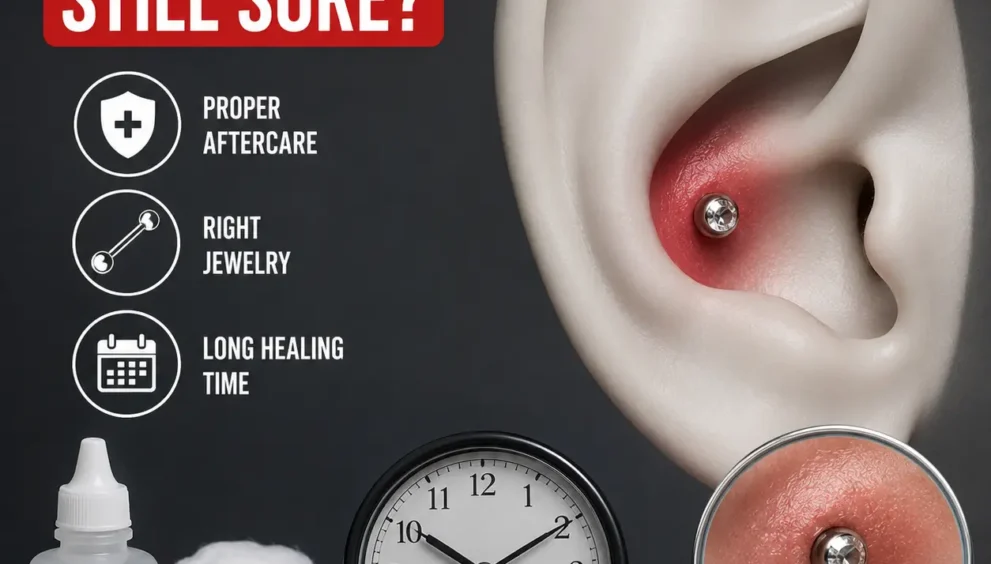
Why Is My Conch Piercing Still Sore After Months?
Conch piercings, situated in the deep, bowl-shaped cartilage of the ear, are a popular choice for their aesthetic appeal and versatility in jewelry. However, unlike lobe piercings that heal relatively quickly, cartilage piercings, especially the conch, are notorious for their extended and often challenging healing periods. It is not uncommon for individuals to experience soreness, discomfort, or irritation months after getting their conch pierced.
This prolonged sensitivity can be frustrating and concerning, but it is often attributable to a combination of biological factors, common irritants, and sometimes, technical complications. Understanding these underlying causes is crucial for effective troubleshooting and ensuring a successful healing outcome.
The Nuances of Cartilage Healing
The primary reason a conch piercing remains sore for an extended period lies in the fundamental biology of cartilage tissue. Cartilage, unlike skin or muscle, has a limited blood supply. This characteristic significantly slows down the healing process, as blood flow is essential for delivering nutrients and immune cells necessary for tissue repair.
While a lobe piercing might heal in 6-8 weeks, a conch piercing healing timeline typically requires 6 to 12 months, and sometimes even longer, to fully mature and become comfortable.
During this lengthy healing phase, the body is constantly working to form a fistula—a healed tunnel of skin—around the jewelry. This process is delicate and easily disrupted.
Even minor disturbances can set back healing, leading to inflammation, swelling, and persistent soreness. The initial acute pain subsides within the first few weeks, but a dull ache, tenderness, or intermittent soreness is a normal part of the healing journey for many months. Expecting a conch piercing to be completely pain-free within a few months is often unrealistic, given the nature of cartilage healing.
Common Irritants and Lifestyle Factors
Beyond the inherent challenges of cartilage healing, several external factors and daily habits can significantly contribute to prolonged soreness. These irritants often trigger an inflammatory response, preventing the piercing from settling down.
1. Trauma and Pressure
One of the most prevalent causes of persistent soreness is physical trauma or pressure to the piercing site. This can manifest in various ways:
•Sleeping on the Piercing: Consistently sleeping on the side with the new conch piercing is a major culprit. The sustained pressure can irritate the healing tissue, cause swelling, and even alter the piercing’s angle, leading to chronic discomfort and the formation of irritation bumps. Using a travel or donut pillow, which allows the ear to rest in the central hole, is highly recommended to alleviate this pressure.
•Accidental Bumps and Snags: Hairbrushes, combs, glasses, headphones, clothing, and even seatbelts can accidentally snag or bump the jewelry. Each instance of trauma can re-injure the delicate healing tissue, restarting the inflammatory cycle and prolonging soreness.
•Touching or Twisting Jewelry: Fiddling with the jewelry, even with clean hands, introduces bacteria and causes micro-trauma to the fistula. This habit is detrimental to healing and should be avoided entirely.
2. Inadequate Aftercare Practices
While proper aftercare is crucial, both insufficient and excessive cleaning can cause problems:
•Improper Cleaning Solutions: Using harsh chemicals like rubbing alcohol, hydrogen peroxide, or strong antiseptic soaps can dry out and damage the healing tissue, leading to irritation and delayed healing. Similarly, ointments can trap bacteria and prevent the piercing from breathing. The gold standard for aftercare is a sterile saline solution (0.9% sodium chloride) applied twice daily.
•Over-cleaning: Cleaning too frequently or too aggressively can strip the piercing of its natural healing agents and cause unnecessary irritation.
•Neglecting to Clean: Conversely, failing to clean the piercing allows crusties and bacteria to build up, increasing the risk of infection and inflammation.
3. Jewelry Issues
The type, material, and fit of the jewelry play a critical role in the healing process:
•Incorrect Jewelry Material: Low-quality jewelry containing nickel or other irritants can cause allergic reactions and prolonged inflammation. Implant-grade materials such as implant-grade titanium (ASTM F-136), niobium, or solid 14k/18k gold are biocompatible and minimize adverse reactions.
•Improper Jewelry Style: Hoops or rings are generally not recommended for initial conch piercings. Their movement and tendency to rotate can cause constant irritation and delay healing. A flat-back labret stud is the preferred initial piece of jewelry, as it minimizes movement and pressure.
•Incorrect Jewelry Size: The initial jewelry should be slightly longer to accommodate swelling. However, once the initial swelling subsides (typically 4-8 weeks), it is crucial to downsize the post to a shorter length.
Leaving an excessively long post in place allows for too much movement, snagging, and can cause the piercing to heal at an incorrect angle or lead to irritated bumps. Conversely, jewelry that is too tight can embed in the tissue, causing significant pain and complications.
Technical Complications and Professional Intervention
Sometimes, prolonged soreness stems from issues that require professional assessment and intervention from an experienced piercer or medical professional.
1. Piercing Angle or Placement
If the piercing was not executed at the correct angle or depth, it might put undue stress on the surrounding cartilage, leading to chronic irritation. An improperly angled piercing may never fully heal comfortably and might require removal and re-piercing.
2. Irritation Bumps vs. Infection
It’s essential to differentiate between an irritation bump and an actual infection. Irritation bumps (often hypertrophic scarring) are common, typically flesh-colored or reddish, and form due to trauma, pressure, or unsuitable jewelry. They are not infections and usually resolve once the irritant is removed.
Infections, while less common, are more serious. Symptoms include severe, worsening pain, excessive swelling, spreading redness and swelling, thick yellow or green foul-smelling discharge, warmth around the piercing, and potentially fever.
If an infection is suspected, it is imperative to seek medical attention promptly. Do not remove the jewelry, as this can trap the infection within the tissue.
3. Migration or Rejection
Though less common in conch piercings than in surface piercings, jewelry migration (the piercing moving from its original placement) or rejection (the body pushing the jewelry out) can occur. These processes are often accompanied by persistent soreness, redness, and thinning of the tissue around the jewelry. If migration or rejection is suspected, consult a professional piercer.
When to Seek Professional Help
While some soreness is normal during the extensive healing period of a conch piercing, certain signs warrant professional attention. If you experience any of the following, it’s advisable to consult your piercer or a medical doctor:
•Severe or escalating pain that doesn’t subside.
•Excessive swelling or redness that spreads.
•Thick, discolored, or foul-smelling discharge.
•Fever or chills.
•Jewelry embedded into the skin.
•A persistent, painful bump that doesn’t improve with addressing common irritants.
Conclusion
A conch piercing is a beautiful addition to one’s ear anatomy, but its healing journey demands patience, diligent aftercare, and an understanding of the factors that can influence its progress. Prolonged soreness months after the initial piercing is often a sign of irritation rather than a severe complication.
By meticulously adhering to proper aftercare, avoiding trauma, ensuring high-quality and appropriately sized jewelry, and seeking professional advice when necessary, individuals can navigate the healing process successfully and enjoy their conch piercing for years to come.