
How Long Does a Riser Desk Last?
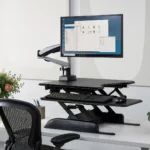
Before buying any desk accessory, it helps to understand what a riser desk is; in simple terms, it’s a compact platform that sits on top of your existing desk and lifts your monitor and keyboard so you can stand while working. Because it uses fewer moving parts than a full standing desk, many buyers assume it lasts forever. That isn’t quite true, and the real answer depends on several factors we’ll walk through below.
Table of Contents
- Quick Answer: Average Riser Desk Lifespan
- Understanding What a Riser Desk Is Built To Do
- Key Factors That Determine How Long a Riser Desk Lasts
- Manual vs Electric Riser Desks: Lifespan Comparison
- Signs Your Riser Desk Is Wearing Out
- How to Extend the Life of Your Riser Desk
- Riser Desk Materials and Why They Matter for Longevity
- Common Myths About Riser Desk Lifespan
- Riser Desk vs Full Standing Desk: Which Lasts Longer?
- How Your Work Environment Affects Riser Desk Durability
- Choosing a Riser Desk Built to Last
- Frequently Asked Questions
- Conclusion
Quick Answer: Average Riser Desk Lifespan
Most riser desks last between 5 and 10 years with normal daily use. Manual spring-lift models tend to last longer, often 7 to 12 years, because they have no motor to wear out. Electric riser desks, however, usually last 5 to 8 years, since their lifespan is tied to motor cycles rather than just the frame.
This range isn’t fixed, though. It shifts depending on build quality, how often you adjust the height, and how much weight sits on the platform daily.
Understanding What a Riser Desk Is Built To Do
A riser desk, sometimes called a desk converter, is designed to add sit-stand flexibility without replacing your current furniture. Unlike a full-height standing desk, it doesn’t need its own legs or floor space. Instead, it rests directly on your desktop.
Because of this design, its lifespan depends on a smaller set of components than a standing desk does. There’s no base frame to wobble over time, no floor-level joints to loosen, and often a simpler lifting mechanism overall.
Key Factors That Determine How Long a Riser Desk Lasts
Several elements combine to decide whether your riser desk reaches the higher or lower end of its expected lifespan.
- Lift mechanism type: Spring-loaded, gas-lift, and electric mechanisms each wear differently, with springs generally outlasting motors.
- Weight load: Consistently placing heavy monitors or equipment near the maximum weight limit accelerates wear on the lift mechanism.
- Adjustment frequency: Raising and lowering the platform many times a day puts more strain on moving joints than occasional use.
- Build materials: Steel columns and reinforced platforms hold up far longer than thin metal or heavy plastic parts.
- Environment: Humidity and temperature swings can stiffen lubricant inside the mechanism, making movement harder over time.
- Maintenance habits: Regular bolt checks and light cleaning prevent small issues from becoming permanent damage.
Understanding these factors gives you a clearer picture before you even open the box, since they explain why two similar-looking riser desks can have very different lifespans. A desk that looks identical on the outside can behave completely differently after two or three years, purely because of what’s happening inside the mechanism.
Manual vs Electric Riser Desks: Lifespan Comparison
Because mechanism type plays such a large role, it’s worth comparing manual and electric riser desks side by side.
| Feature | Manual Spring-Lift Riser | Electric Riser Desk |
|---|---|---|
| Average Lifespan | 7–12 years | 5–8 years |
| Main Failure Point | Spring tension loss | Motor or control panel |
| Maintenance Needs | Occasional lubrication | Cable and connector checks |
| Weight Capacity | Typically lower | Often higher on premium models |
| Repair Cost | Usually lower | Can be higher for motor parts |
As the table shows, manual models generally win on raw longevity, while electric riser desks trade some lifespan for smoother, motorized convenience.
Signs Your Riser Desk Is Wearing Out
Because a riser desk fails gradually rather than suddenly, catching early warning signs saves you from a rougher breakdown later.
- The platform feels wobbly even after tightening every visible bolt
- Height adjustment becomes noticeably stiffer or requires extra force
- You hear grinding or clicking sounds during movement
- The platform no longer sits level on both sides
- Cables or connectors show visible fraying near the base
If you notice two or more of these signs together, it’s usually time to inspect the mechanism closely rather than waiting for a complete failure.
How to Extend the Life of Your Riser Desk
A few consistent habits can add real years to your riser desk without any special tools or effort.
- Keep total weight comfortably below the maximum listed capacity, rather than testing the limit
- Center your monitor and keyboard weight instead of loading one side heavily
- Wipe down the platform and lift columns monthly to prevent dust buildup
- Recheck bolts every few months, especially after frequent height changes
- Avoid rapid, repeated adjustments in a short period, since this stresses the mechanism
- Keep cables loose enough that they never pull tight during movement
Because these steps take only a few minutes, they’re easy to build into a regular routine rather than treating maintenance as an occasional chore.
Riser Desk Materials and Why They Matter for Longevity
The materials used in a riser desk quietly decide how long it will actually survive daily use, even more than the mechanism type in some cases.
- Steel support columns: These resist bending far better than aluminum or plastic alternatives, especially under repeated height changes.
- Reinforced platform edges: A platform with reinforced corners handles monitor weight without flexing or cracking over years of use.
- Powder-coated finishes: This coating resists rust and scratches, which matters if your riser desk sits near a window or humid area.
- Quality bolts and brackets: Cheap hardware strips easily during repeated tightening, while hardened steel bolts hold their grip much longer.
Because these details rarely appear in product listings, checking customer reviews or product specs before buying can reveal whether a model was built for years of use or just a short-term fix.
Common Myths About Riser Desk Lifespan
A few misconceptions tend to shape buying decisions, so it’s worth clearing them up directly.
Myth: A higher price always means a longer lifespan. In reality, price often reflects features like electric lift or extra storage, not necessarily durability. A mid-range manual riser desk with solid steel columns can easily outlast a pricier electric model with a weak motor.
Myth: Riser desks don’t need any maintenance. Because they look simple, many people assume there’s nothing to maintain. However, dust buildup and loose bolts affect riser desks just as much as full standing desks, only on a smaller scale.
Myth: Electric models are always more reliable. Motors add convenience, but they also introduce a component that can fail entirely, unlike a spring mechanism that typically degrades slowly and predictably instead of stopping all at once.
Clearing up these assumptions helps you judge a riser desk on its actual build quality rather than its price tag or feature list alone.
Riser Desk vs Full Standing Desk: Which Lasts Longer?
This is a common point of confusion, so it deserves a direct comparison. A full standing desk typically has its own motorized legs and a heavier frame, which means more components that can eventually fail. A riser desk, by contrast, sits on your existing desk and usually has a simpler mechanism overall.
As a result, well-maintained manual riser desks can actually outlast budget electric standing desks, even though they cost significantly less upfront. However, premium electric standing desks with dual motors often match or exceed a riser desk’s lifespan, since their components are built for heavier, more frequent daily use.
In short, if longevity is your top priority and your budget is limited, a manual riser desk is often the more durable choice per dollar spent.
How Your Work Environment Affects Riser Desk Durability
Where you place your riser desk matters more than most buyers expect, since environmental stress adds up quietly over time.
- Home offices vs shared workspaces: A riser desk used by one person at home typically sees far fewer adjustments than one shared across a hot-desking office, which directly reduces mechanical wear.
- Sunlight exposure: Direct sunlight can fade the platform finish and slowly weaken plastic components, so positioning your desk away from windows helps preserve its appearance and structure.
- Humidity levels: Damp environments encourage rust on metal columns and can stiffen lubricant inside the lift mechanism, making adjustments feel harder over months of use.
- Room temperature swings: Frequent hot-to-cold shifts can cause metal parts to expand and contract slightly, which over years may loosen fittings that were originally tight.
Since most people don’t think about the environment when buying a riser desk, this is often the easiest longevity factor to overlook, and one of the simplest to fix with better desk placement. Even moving your setup a few feet away from a window or vent can noticeably slow down long-term wear.
Choosing a Riser Desk Built to Last
If longevity is your main concern while shopping, a few practical checks make the decision easier.
- Look for steel columns rather than lightweight aluminum or plastic supports
- Check the listed weight capacity against what you’ll actually place on it daily
- Read reviews specifically mentioning long-term use, not just first impressions
- Prefer manual mechanisms if you want the simplest, most repair-friendly option
- Confirm the warranty period, since manufacturers rarely offer long coverage on products they don’t expect to last
Taking a few extra minutes to compare these details before purchasing often saves years of frustration down the line, and it’s a habit worth building into any furniture purchase, not just this one.
Frequently Asked Questions
How long does a riser desk last compared to a standing desk?
A riser desk typically lasts 5 to 12 years depending on its mechanism, which is similar to or slightly shorter than a full standing desk. The difference usually comes down to build quality rather than the category itself. Manual riser desks often edge out budget electric standing desks in raw durability.
Can a manual riser desk really outlast an electric one?
Yes, in most cases. Manual riser desks avoid motor wear entirely, since they rely on a spring or gas-lift system instead. This simpler design means fewer components can fail over time. Electric models add convenience but introduce motor and control-panel wear as a trade-off.
Does exceeding the weight capacity shorten a riser desk’s lifespan?
Yes, consistently overloading the platform puts extra strain on the lift mechanism and support columns. Over time, this can cause the mechanism to loosen or stick during adjustments. Staying within the recommended weight limit is one of the simplest ways to protect your investment.
What warranty length should I expect on a quality riser desk?
Most reputable riser desks come with a warranty ranging from 1 to 5 years, depending on the brand and mechanism type. Manual models often carry slightly longer warranties due to their simpler design. Always check whether the warranty covers the lift mechanism specifically, not just the frame.
When should I repair my riser desk instead of replacing it?
Repair makes sense when the frame is still solid and only one component, like a spring or a cable, has failed. If the repair cost stays well below the price of a new unit, fixing it is usually the smarter choice. Widespread wobbling or multiple failing parts, however, usually signal it’s time to replace the desk entirely.
Do cheaper riser desks break down faster than premium ones?
Generally, yes, though price alone isn’t the full story. Budget riser desks often use thinner metal, weaker springs, and lower-grade bolts that loosen faster under regular use. Premium models typically invest in steel columns and reinforced platforms, which directly extends how many years the desk stays stable and functional.
Conclusion
So, what is a riser desk expected to give you in real-world use? With reasonable care, most models comfortably last between 5 and 12 years, with manual mechanisms generally outlasting electric ones. By staying within the weight limit, distributing load evenly, checking bolts periodically, and choosing solid materials from the start, you can push your riser desk toward the higher end of that range and get long-term value from a relatively small investment.