
SEO Content Writing Tools: How They Work and Why They Matter
Ranking today means proving depth, not stuffing one keyword everywhere. That's exactly why SEO content writing tools have become non-negotiable for serious writers and agencies alike. These platforms help you research, structure, and score content before it ever goes live on a page. This guide breaks down how they actually work, including a free semantic keyword research tool most beginners overlook completely. Every pick below is judged on real usability, not marketing copy, so you can build a stack that genuinely fits your workflow. Whether you're a solo blogger or managing several client accounts, the right combination of tools saves hours of manual research every single week.
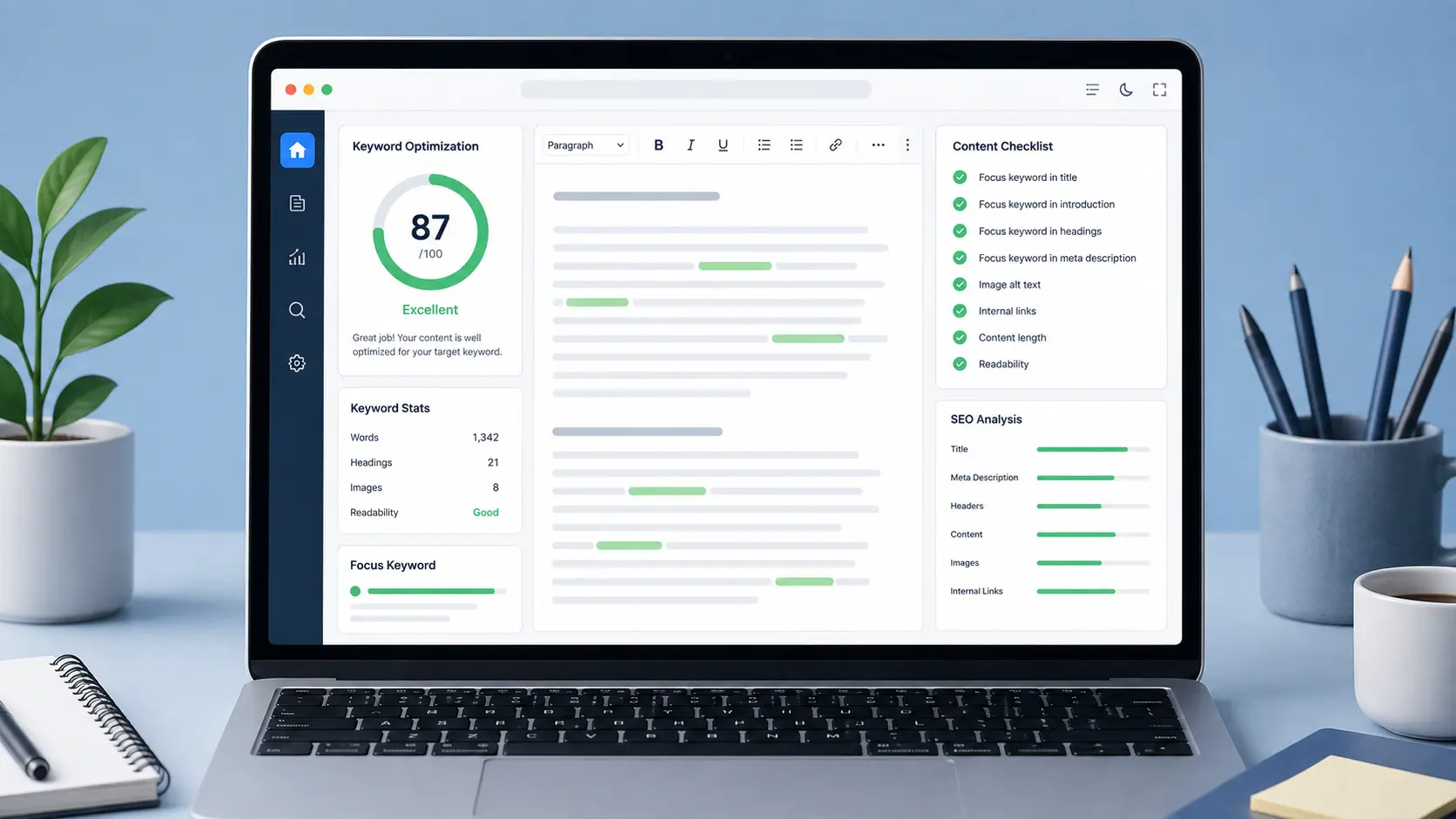
Table of Contents
- What Are SEO Content Writing Tools?
- Why SEO Content Writing Tools Matter
- Best SEO Content Writing Tools Right Now
- SEO Content Writing Tools for Agencies and Teams
- Free SEO Content Writing Tools You Can Use Today
- Quick Comparison Table
- SEO Writing Tools vs Traditional Content Writing
- How to Choose the Right Tool
- Common Mistakes to Avoid
- Tips to Get Better Results
- When to Upgrade From Free to Paid Tools
- Conclusion
- FAQs
What Are SEO Content Writing Tools?
- SEO content writing tools are software platforms that research, draft, and score content so it matches what search engines and readers expect.
- Consequently, most platforms bundle keyword research, content briefs, live optimization scoring, and grammar checks into one connected workflow.
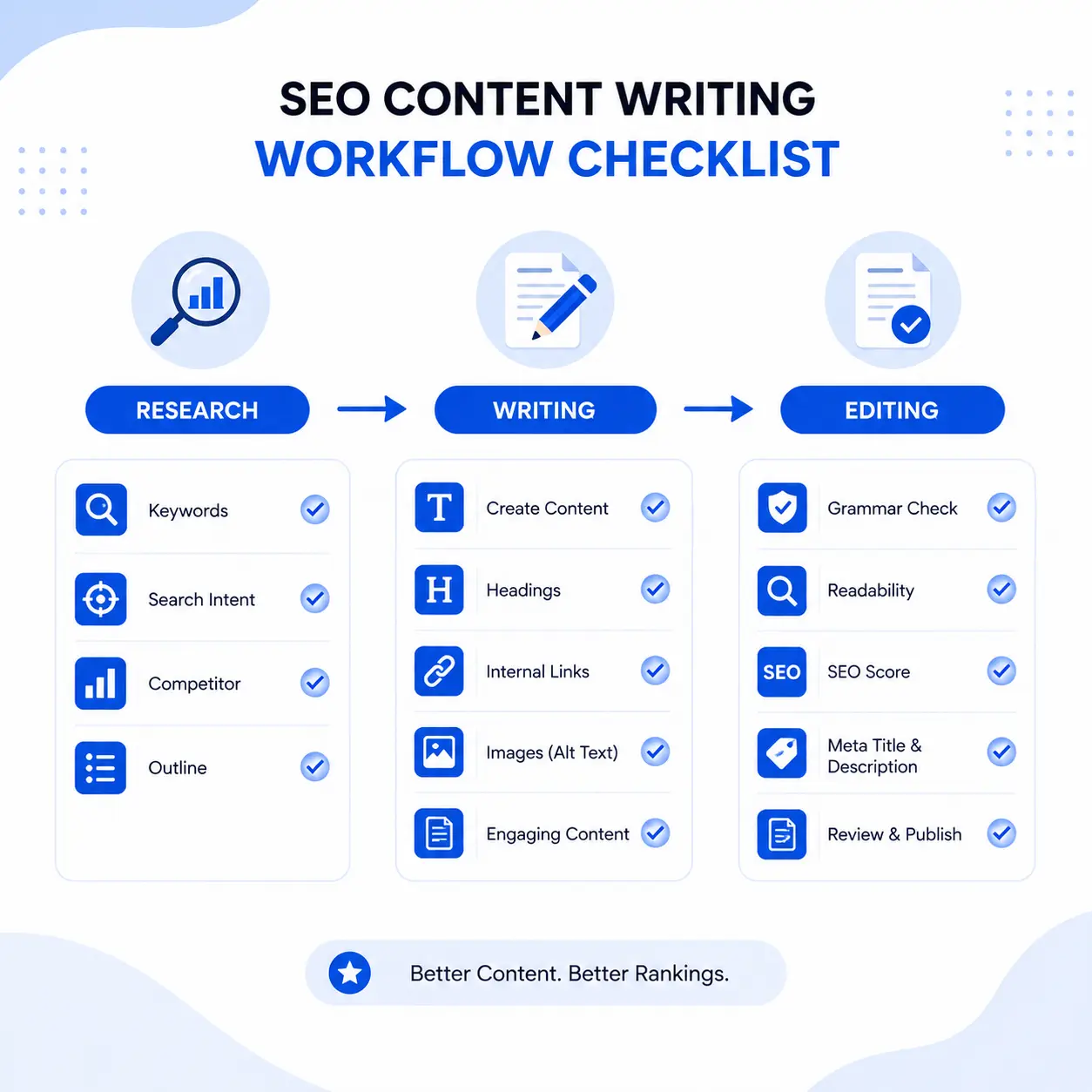
- Research tools surface keywords and semantic terms before writing, editor tools score a draft against top-ranking pages, and polish tools clean up grammar afterward.
- As a result, an efficient setup usually pulls from all three categories instead of depending on one single all-in-one platform.
Why SEO Content Writing Tools Matter
- Because AI Overviews and zero-click search are now common, content has to earn a citation, not just a ranking position.
- Similarly, topical authority has overtaken single-keyword targeting, so semantic coverage now matters more than plain keyword density.
- Meanwhile, content velocity has become a real advantage, since faster research and drafting means more consistent publishing.
- In fact, free entry points have expanded so much that smaller sites no longer need a costly subscription just to get started.
- Search engines are also getting better at detecting thin, repetitive content, which makes genuine topical depth harder to fake with keyword tricks alone.
- Readers themselves are more likely to trust and share content that clearly answers their question instead of circling around it with filler sentences.
- Voice search and conversational queries are pushing writers toward natural language patterns, which most modern SEO tools now account for directly.
- Finally, sites that consistently publish well-structured, semantically rich content tend to build authority faster than sites chasing single keywords in isolation.
Best SEO Content Writing Tools Right Now
- Surfer SEO analyzes top-ranking pages and scores a draft live, guiding heading structure, word count, and key terms to include.
- Clearscope grades content against top competitors for relevance and readability, though it ships without a free plan.
- Frase automatically builds content briefs from SERP data and lets a writer move between research, outline, and draft in one tab.
- MarketMuse maps topical authority and content gaps across an entire site, which larger teams rely on for planning at scale.
- Additionally, tools like Jasper and Writesonic focus more on AI-assisted drafting, while Surfer and Clearscope focus on scoring an existing draft.
- Therefore, pairing one scoring tool with one drafting tool usually beats relying on a single platform for everything.
SEO Content Writing Tools for Agencies and Teams
- Agencies managing several clients face a different problem than solo bloggers, since every account often needs its own keyword strategy, tone, and reporting cadence.
- Consequently, collaboration features matter more here than raw scoring accuracy, because writers, editors, and account managers all need visibility into the same brief.
- Tools like Semrush Writing Assistant and Frase support shared workspaces, so a strategist can leave notes directly inside a content brief instead of switching to email or Slack.
- Similarly, Google Docs and WordPress integrations save real time for agencies, since writers can work in a familiar editor while still getting live optimization suggestions in a sidebar.
- For teams onboarding regional or bilingual clients, native language support becomes a deciding factor, as most premium platforms still treat non-English markets as an afterthought.
- As a result, an agency stack usually looks different from a solo blogger's stack, leaning more toward collaboration, reporting, and multi-client organization than toward a single powerful editor.
- Ultimately, the right setup depends on how many writers touch a single piece of content before it gets published, not just on which tool scores the highest.
Free SEO Content Writing Tools You Can Use Today
- Anyone searching for SEO content writing tools free of charge should start with Yoast SEO or Rank Math for on-page checks inside WordPress.
- Grammarly and Hemingway Editor cover grammar and readability for free, handling the polish stage without any paid subscription.
- For semantic research, a free AI tool for SEO optimization can pull related terms from a single seed keyword within seconds.
- Likewise, if older posts need a refresh, a free tool that extracts keyword ideas from existing text saves real research time.
- Together, these free tools for content writing cover nearly the entire workflow that most paid suites charge heavily for every month.
- Consequently, a writer can publish well-optimized posts for months before a paid SEO writing assistant becomes genuinely necessary.
Quick Comparison Table
| Tool | Best For | Free Plan | Standout Feature |
|---|---|---|---|
| Surfer SEO | Live content scoring | No | Real-time score vs top SERPs |
| Clearscope | Content grading | No | Deep relevance and readability reports |
| Frase | Content briefs | Limited | AI outlines built from SERP data |
| Yoast SEO | WordPress on-page SEO | Yes | Focus keyword and readability checks |
| Grammarly | Grammar and clarity | Yes | Real-time writing corrections |

SEO Writing Tools vs Traditional Content Writing
- Traditional writing depends on instinct and manual keyword research, so it often misses subtopics that competitors already rank for.
- On the other hand, tool-assisted writing grounds every decision in real SERP data and surfaces content gaps automatically.
- Traditional editing catches grammar issues only after a full read-through, whereas tool-assisted editing flags problems line by line while typing.
- Ultimately, tools do not replace judgment; they simply remove the guesswork so writing time goes toward original insight instead of research.
How to Choose the Right Tool
- Budget matters first, so stack free tools before paying for a full suite of premium features.
- Similarly, a solo writer needs simplicity, while an agency managing several clients needs collaboration and reporting built in.
- Before shopping, identify whether the real gap is research, on-page structure, or grammar, since no single tool fixes all three equally well.
- Finally, publishing volume decides the payoff, because high-volume publishers gain more from paid automation than occasional bloggers do.
Common Mistakes to Avoid
- Chasing a perfect content score instead of writing something that genuinely sounds natural to a reader.
- Optimizing purely for keyword frequency while ignoring what the searcher is actually trying to find.
- Publishing an informational article for a keyword that clearly wants a product or service page instead.
- Skipping the readability pass simply because the SEO score already looks acceptable on paper.
- Relying on a single tool for everything instead of stacking research, editing, and polish separately.
Tips to Get Better Results
- Start with keyword and semantic research before outlining, never after the draft is already finished.
- Run a free tool pass first, then bring in a paid SEO writing assistant only for a final check.
- Never let a content score override sentences that already sound natural and human.
- Update older articles with newer semantic terms every few months instead of optimizing only new posts.
- For agencies handling bilingual clients, a bilingual business bio generator speeds up onboarding without sacrificing quality.
When to Upgrade From Free to Paid Tools
Free tools work well until content output scales past a certain point. At that stage, manual research starts costing more time than a paid subscription would.
- Publishing more than 8–10 articles a month usually signals it's time to consider a paid content editor.
- Managing three or more client accounts makes collaboration features worth the extra monthly cost.
- Competing for high-difficulty keywords often needs deeper SERP analysis than free tools provide.
Agencies feel this shift first, since client reporting and multi-writer collaboration demand more than a single free plugin can offer.
- Paid tools save research hours, which matters more once billable client work fills the schedule.
- A hybrid approach — free tools for smaller sites, paid tools for competitive client keywords — works well for most growing agencies.
Conclusion
- The best SEO content writing tools fit an actual budget and workflow, not whichever platform spends the most on marketing.
- A free stack — one keyword-research tool, one on-page plugin, and one grammar checker — covers nearly everything a paid suite promises smaller sites.
- No tool writes genuinely great content alone; it still takes a writer's judgment and a clear sense of what the reader actually needs.
FAQs
What are SEO content writing tools?
They are platforms that help research keywords, build content briefs, and optimize writing so it matches search intent. Most combine keyword research, readability checks, and on-page scoring into one connected workflow. This saves a writer from juggling several separate apps.
Are free SEO content writing tools effective?
Yes, free tools cover keyword research, on-page optimization, and grammar checking without major gaps for most sites. They won't match a paid tool's live SERP scoring, but they're genuinely enough for beginners. Many writers rely entirely on a free stack for years.
What's the difference between an SEO writing assistant and a grammar checker?
An SEO writing assistant focuses on keyword usage and how content compares to top-ranking pages. A grammar checker focuses purely on sentence-level correctness instead. Ideally, both run together in the same writing workflow.
Can AI writing tools replace a human content writer?
No, AI tools speed up research and drafting, but a human still needs to fact-check and add original insight. Content published without review often reads generically and misses nuance. The strongest results always come from AI-assisted drafting followed by human editing.
Do SEO content writing tools work for non-English content?
Most premium tools are built primarily around English-language search results. Free tools built for native bilingual generation fill this gap without relying on machine translation. This matters most for agencies onboarding regional clients quickly.
How many SEO tools should a writer use at once?
Most writers do well with three: one for keyword research, one for on-page optimization, and one for grammar. Stacking too many overlapping tools slows work down and gives conflicting suggestions. Start small and add a paid tool only once the free stack feels limiting.
Is keyword density still important with modern tools?
Not nearly as much as it used to be, since modern tools focus on semantic coverage rather than repeating one exact keyword. Search engines now reward content that naturally covers related terms and subtopics. Tools built around semantic terms prioritize this spread over raw repetition.