

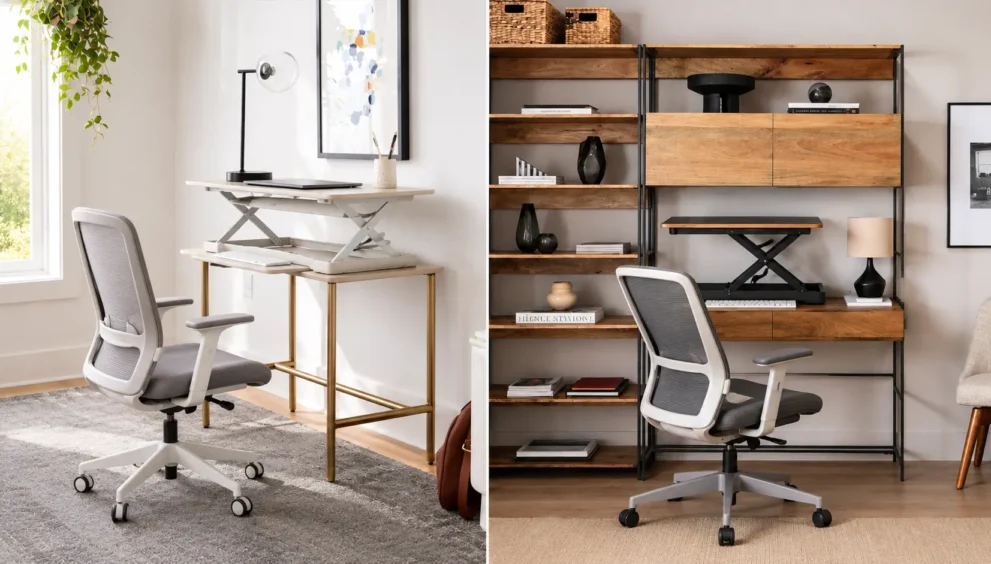
Riser Desk for Small Spaces: Is It a Good Fit?
Small workspaces come with a big question mark: how do you stay comfortable and productive when your desk barely has room for a laptop, let alone a full standing desk setup? That’s exactly where a riser desk earns its place. Because it sits directly on top of the desk you already own, a riser desk lets you switch between sitting and standing without eating up extra floor space or forcing you to redesign your entire room. If you’ve been wondering whether this compact upgrade actually works in a tight corner, spare bedroom, or shared office nook, the short answer is yes — and this guide walks you through exactly why, along with how to make it work in your specific setup.
Table of Contents
- What Is a Riser Desk?
- Why Small Spaces Need a Smarter Setup
- Does a Riser Desk Actually Work in a Small Space?
- The Business Owner’s Perspective: Doing More With Less
- Benefits of a Riser Desk in a Tight Workspace
- What to Look for Before You Buy One
- Tips to Make a Riser Desk Work in a Small Room
- Riser Desk vs. Other Small-Space Options
- Common Concerns, Answered Honestly
- Frequently Asked Questions
A Riser Desk?
A riser desk is a platform that sits on top of your existing desk and raises your monitor, keyboard, and mouse to standing height whenever you want. Instead of replacing your furniture with a full standing desk, you simply place the riser on your current surface, and it lifts your workstation up when you push a lever or button, then lowers it right back down when you want to sit. That’s really the whole idea — no wiring, no bolting anything to the wall, no need to rearrange your room.
Because it doesn’t require a total office overhaul, a riser desk has become the go-to option for people working in apartments, home offices, and even shared coworking corners where space is already at a premium.
Why Small Spaces Need a Smarter Setup
Let’s be honest: not everyone has a spare room to dedicate to a home office. Plenty of people are working from a corner of the living room, a converted closet, or a desk squeezed between a bookshelf and a window. In situations like that, every piece of furniture has to earn its spot. A full standing desk, no matter how nice it looks, simply isn’t realistic when your entire workspace footprint is a few square feet.
This is exactly why a smarter, more compact setup matters. You don’t need more furniture — you need furniture that does more with less. And that’s the entire philosophy behind a riser desk: it upgrades your existing setup instead of demanding a new one.
Does a Riser Desk Actually Work in a Small Space?
Yes, and here’s the honest reasoning behind it. A riser desk doesn’t add a new desk to your room — it adds functionality to the desk you already have. Since it sits directly on your existing surface, it doesn’t require any additional floor space at all. You’re not squeezing in a second piece of furniture; you’re upgrading the one you’re already using.
That said, a small space does call for a little bit of planning. You’ll want to measure your desk’s depth before buying, since a riser desk needs enough surface area to sit comfortably without hanging off the edge. You’ll also want to think about how much desk space you’ll have left once the riser is folded down for sitting mode, especially if you like to keep notebooks, a coffee mug, or other essentials within reach.
Once those two things are sorted, a riser desk fits into a small room just as easily as it fits into a spacious corner office — because, in either case, it’s working with the furniture footprint you already have.
The Business Owner’s Perspective: Doing More With Less
If you’re running a small business or a growing team, you already know this feeling: your budget doesn’t always match your ambition. In the early stages, you’re not walking into a fully furnished office with a design budget to match. You’re figuring things out as you go — hiring a new team member here, setting up a small workspace there, making the most of a spare room that was never meant to be an office in the first place.
This is where a riser desk genuinely shines for business owners. Instead of investing heavily in full standing desks for every team member, which adds up fast once your headcount grows, a riser desk lets you upgrade an existing setup for a fraction of the cost. You can turn a modest corner into a comfortable, functional workstation without overhauling the whole room or blowing your equipment budget.
Picture this: your team has outgrown the kitchen table setup, so you carve out a small room and add a few desks. Instead of buying expensive standing desks for everyone, you add riser desks to the desks you already have. The result looks intentional, feels comfortable, and costs a fraction of what a full redesign would. That’s not a compromise — that’s smart resource management, and it’s exactly the kind of decision that separates businesses that scale sustainably from ones that overspend before they’re ready.
Benefits of a Riser Desk in a Tight Workspace
A riser desk isn’t just a space-saver — it brings real, everyday advantages once it’s part of your routine. Here’s what stands out most in a small workspace:
- No extra floor space required. Since it sits on your current desk, it doesn’t compete with your room for square footage.
- Quick to set up. Most riser desks are ready to use within minutes, with no tools or assembly required.
- Budget-friendly compared to a full standing desk. You get the sit-stand benefit without the bigger price tag of new furniture.
- Portable. If you move rooms, switch desks, or relocate your office entirely, a riser desk comes with you.
- Encourages movement in a small routine. Even in a cramped setup, being able to stand and shift positions keeps your day from feeling stagnant.
- Works with almost any desk style. Whether you have a compact writing desk or a wide table, most riser desks adjust to fit.
What to Look for Before You Buy One
Not every riser desk is built the same, and in a small space, the wrong choice can feel more like a burden than an upgrade. Before you buy, check these details:
- Footprint and depth. Confirm the riser fits comfortably on your desk without overhanging the edge.
- Weight capacity. If you’re running dual monitors or heavier equipment, make sure the platform can handle it.
- Adjustment mechanism. Manual lever models are simpler and more affordable, while gas-spring or electric models offer smoother adjustments at a higher price.
- Folded-down height. Some risers sit fairly tall even when lowered, which can eat into your comfortable sitting posture. Check this if desk height matters to you.
- Stability at full height. A wobbly platform undermines the entire point of the upgrade, especially if you type with any real speed or gesture during calls.
Tips to Make a Riser Desk Work in a Small Room
Getting the desk itself is only step one — how you set it up in a small room makes the real difference. A few practical adjustments go a long way:
- Position your desk near natural light if possible, since small rooms can feel cramped without it.
- Keep cables tidy with a simple clip or sleeve so your compact space doesn’t turn chaotic.
- Choose a riser with a slim profile if your room already feels tight, so it doesn’t visually dominate the desk.
- Pair it with a small anti-fatigue mat if you plan to stand often — it makes a noticeable difference in comfort during longer standing sessions.
- Keep only essentials on your desk. In a small space, clutter competes directly with the extra room a riser desk needs to move up and down freely.
Riser Desk vs. Other Small-Space Options
Before settling on a riser desk, it’s worth knowing what else is out there, so your choice feels informed rather than default. A compact standing desk is one alternative — some brands now make narrower versions specifically for tight rooms. These can work, but they still require you to replace your existing furniture entirely, which isn’t always practical if your current desk still has plenty of life left in it or you’re renting and can’t commit to bulkier pieces.
Another option is a simple laptop stand paired with a separate keyboard, which raises your screen without adding a full platform. This works in a pinch, but it usually lacks the stability and smooth height adjustment that a proper riser desk offers, and switching between sitting and standing tends to be slower and more of a hassle.
Compared to both alternatives, a riser desk hits a middle ground that’s hard to beat for small spaces: it keeps your existing desk, adds genuine sit-stand functionality, and doesn’t ask you to compromise on stability or convenience. It’s not the only option on the market, but for anyone who wants a real upgrade without a real commitment, it’s usually the most balanced choice.
Common Concerns, Answered Honestly
A few worries come up again and again when people consider a riser desk for a small space, so let’s address them directly instead of dancing around them.
“Will it make my desk feel more cluttered?” Not if you choose a size that matches your desk. A riser that’s too large for your surface will feel crowded, but a properly sized one actually organizes your setup rather than cluttering it.
“Is it sturdy enough for daily use?” Most quality riser desks are built to handle daily standing and sitting transitions without issue. Stability mostly comes down to choosing a reputable model rather than the cheapest option available.
“Will it look out of place in a small, tidy room?” A riser desk with a clean, simple design tends to blend in naturally rather than sticking out. Many modern models are built with small spaces specifically in mind.
Frequently Asked Questions
Is a riser desk a good fit for a small home office?
Yes, a riser desk is one of the most practical upgrades for a small home office because it works with your existing desk instead of requiring extra floor space. It gives you the flexibility to sit or stand throughout the day without the cost or bulk of a full standing desk. As long as you measure your desk and confirm the riser fits comfortably, it adapts well to almost any compact room.
Does a riser desk take up too much room on a small desk?
A properly sized riser desk shouldn’t overwhelm your surface, but it’s important to check the dimensions before buying. Measure your desk’s depth and compare it against the riser’s footprint so it doesn’t hang off the edge. Choosing a slim, compact model designed for smaller surfaces usually solves this concern entirely.
Can a small business use riser desks instead of full standing desks for the team?
Absolutely, and it’s often the smarter financial choice for a growing team. Riser desks let a business upgrade existing furniture at a fraction of the cost of new standing desks, which matters a lot when budgets are tight in the early stages. As the business grows and the setup proves valuable, upgrading to full standing desks later becomes a much easier, more informed decision.
Final Thoughts
A riser desk proves that comfort and functionality don’t require a big room or a big budget. Whether you’re working from a small apartment corner or setting up a modest office for a growing team, it adapts to the space you already have instead of demanding more from it. For anyone working with limited square footage, that’s not just a good fit — it’s genuinely one of the smartest upgrades available.