
Common Conch Piercing Problems and How to Fix Them
A conch piercing can look stylish and bold, but healing often takes patience. Many people search for common conch piercing problems and how to fix them because cartilage piercings usually heal more slowly than lobe piercings. Since the conch sits in the center of the ear, it faces pressure from pillows, headphones, hair, and jewelry movement. As a result, irritation can last longer if aftercare is inconsistent.
The good news is that most conch piercing issues improve with proper cleaning, quality jewelry, and less friction. This guide explains the most common problems, why they happen, and what you can do to help your piercing heal safely.
Why Conch Piercings Can Be Difficult to Heal?
Conch piercings pass through thick cartilage instead of soft skin, so healing often takes longer than expected. In many cases, following a complete conch piercing guide for pain, healing time, jewelry, and care tips can help reduce irritation and support recovery. Small daily pressure from sleeping, headphones, jewelry changes, or hair snagging can keep the piercing from calming down.
Several factors can slow healing:
- Sleeping on the pierced ear
- Wearing tight headphones or helmets
- Touching the jewelry often
- Changing jewelry too early
- Low-quality metal jewelry
- Hair snagging around the piercing
- Poor aftercare habits
Therefore, small daily irritation can keep the piercing from calming down.
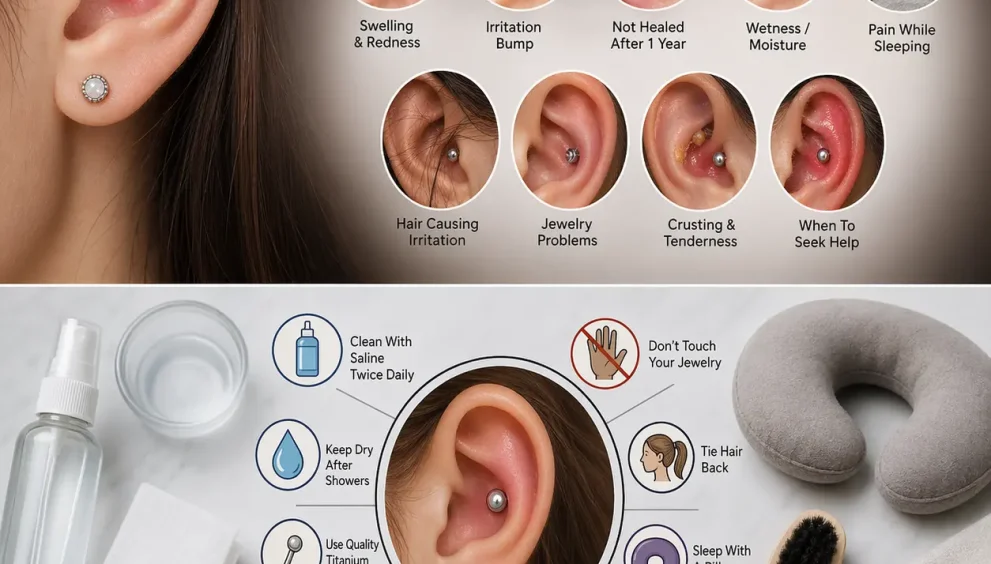
1. Persistent Swelling and Redness
Mild swelling is normal during the first few days. However, if the area stays puffy for weeks or returns often, pressure or irritation may be the cause.
How to Fix It
- Clean with sterile saline twice daily
- Use a cold compress for a few minutes
- Avoid sleeping on that side
- Remove pressure from headphones or masks
- Keep your hands away from the jewelry
In addition, make sure the jewelry is not too short. Tight jewelry can trap swelling.
2. Conch Piercing Bump on the Front or Back
A bump is one of the most common conch piercing problems. Usually, it is an irritation bump rather than a true keloid. These bumps often appear when the piercing gets disturbed repeatedly.
Common Causes
- Jewelry is moving too much
- Hair wrapping around the post
- Sleeping pressure
- Moisture left behind after showers
- Frequent jewelry changes
How to Fix It
- Continue saline cleaning
- Dry the area gently after washing
- Leave the jewelry alone
- Use implant-grade titanium jewelry
- Reduce movement and friction
Most irritation bumps shrink once the source of stress is removed.
3. Piercing Still Not Healed After One Year
Many people worry when a conch piercing still feels wet, crusty, or sore after one year. In reality, some cartilage piercings need extra time, especially if healing was interrupted.
Why It Happens
- Repeated jewelry changes
- Early downsizing issues
- Hair product exposure
- Sleeping pressure without noticing
- Minor recurring inflammation
How to Fix It
- Stop changing jewelry unless necessary
- Keep one high-quality titanium piece in place
- Clean consistently but gently
- Dry after showers and sweating
- Avoid touching to “check” healing
Often, stable jewelry and fewer disturbances make the biggest difference.
4. Wetness or Moisture Around the Piercing
If the piercing feels damp during jewelry changes, trapped moisture may be present. Sometimes lymph fluid also creates a wet feeling.
How to Fix It
- Rinse in the shower with warm water
- Pat dry with clean tissue afterward
- Use a hair dryer on a cool or low setting
- Keep hair wet products away from the ear
- Avoid over-soaking the piercing
Keeping the area dry can help calm stubborn irritation.
5. Pain While Sleeping
Even if you think you are not sleeping on it, nighttime pressure can still happen. Many people roll onto the pierced side without realizing it, which is why learning how to clean your conch piercing safely at home and reduce irritation can support faster healing.
How to Fix It
- Use a travel pillow or a piercing pillow
- Sleep with the ear centered in the hole
- Tie long hair back before bed
- Keep pillowcases clean
This simple change often improves healing quickly.
6. Hair Causing Irritation
Long hair is a hidden reason many conch piercings stay angry. Hair can wrap around jewelry, pull the post, or transfer oils and styling products.
How to Fix It
- Tie your hair away from your ear
- Brush carefully around the piercing
- Avoid hairspray near the area
- Clean after salon products or sweating
Even small daily hair snags can delay healing.
7. Jewelry Problems
Jewelry quality and size matter more than many people realize. If the jewelry is too tight, too loose, or made from poor metal, healing may stall.
Best Jewelry for Healing
- Implant-grade titanium
- Properly fitted flat-back labret
- Smooth finish
- The correct length after swelling reduces
Avoid
- Cheap mystery metals
- Heavy hoops too early
- Rough threads or sharp edges
A professional piercer can help confirm sizing.
8. Crusting and Tenderness
Light crusting is common during healing. However, thick crust or ongoing soreness may mean irritation continues.
How to Fix It
- Soften the crust with warm saline first
- Never pick crust off dry
- Keep cleaning gently and consistently
- Reduce friction sources immediately
Because harsh cleaning can worsen tenderness, less is often better.
9. Signs You Should Seek Professional Help
Most issues are minor, but some need expert care.
Get Help If You Notice
- Spreading redness
- Severe swelling
- Hot skin around the piercing
- Green or yellow discharge
- Fever
- Jewelry embedding into skin
- Strong ongoing pain
A professional piercer or healthcare provider can assess the issue safely.
Best Healing Routine for a Problematic Conch Piercing
If your conch has been difficult, simplify everything.
Daily Routine
- Wash your hands first
- Spray sterile saline morning and night
- Rinse gently in the shower
- Dry completely
- Do not rotate jewelry
- Avoid pressure all day
- Leave it alone
Consistency matters more than using many products.
How Long Until It Finally Heals?
For an easy healing process, many conch piercings settle within 6–12 months. However, if the piercing has faced repeated irritation, healing can stretch to 18 months or even longer. Therefore, a delayed conch piercing is frustrating but not always abnormal.
Once irritation stops, healing often improves noticeably.
Final Thoughts
Understanding common conch piercing problems and how to fix them helps you avoid unnecessary stress. Most long-term issues come from pressure, moisture, hair snags, jewelry problems, or frequent changing. Fortunately, these causes are manageable.
Focus on quality titanium jewelry, gentle saline care, complete drying, and reducing friction. Above all, give the piercing time and stability. Many stubborn conch piercings eventually heal well once they are finally left in peace.