

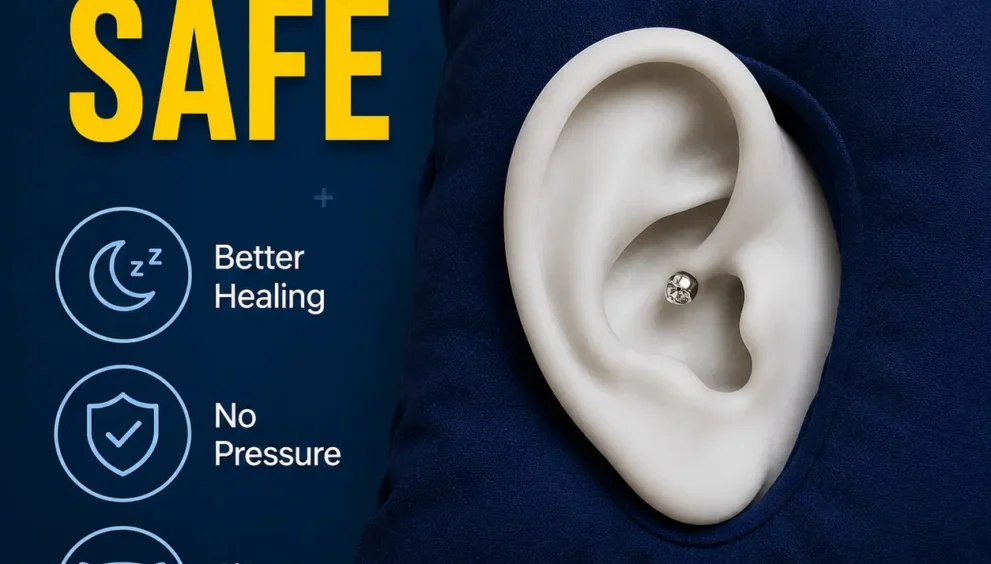
Can You Sleep on a Conch Piercing? Safe Sleeping Tips
A new conch piercing can completely transform your ear styling, but it also comes with a long healing period. One of the most common questions people ask is: Can you sleep on a conch piercing?
The short answer is no. Sleeping directly on a healing conch piercing can cause irritation, swelling, pain, and even delay the healing process. Because the conch is located in the thick cartilage at the center of the ear, it is especially vulnerable to pressure while you sleep.
Fortunately, with the right habits and sleeping techniques, you can protect your piercing and heal more comfortably while reducing the risk of a conch piercing bump.
Why You Should Not Sleep on a New Conch Piercing
A conch piercing passes through cartilage rather than soft tissue. Since cartilage receives less blood flow than the earlobe, it naturally heals more slowly.
When you sleep on the pierced side, several problems can occur:
- Increased swelling and tenderness
- Irritation bumps around the jewelry
- Prolonged healing time
- Jewelry shifting or healing at an angle
- Increased risk of infection from pillowcase bacteria
- Pressure-related discomfort every morning
Even if your conch piercing feels fine during the day, repeated pressure at night can keep the area irritated and prevent proper healing.
What Happens If You Accidentally Sleep on a Conch Piercing?
Many people roll onto their pierced side without realizing it. A single night usually will not ruin your piercing, but you may notice:
- Mild redness
- Temporary swelling
- Increased soreness
- A throbbing sensation
- Small irritation bumps developing
If this happens, clean the piercing with sterile saline solution and avoid putting pressure on it for the next few nights.
However, if symptoms continue to worsen, you should contact your piercer for professional advice.
How Long Should You Avoid Sleeping on a Conch Piercing?
Healing times vary from person to person, but conch piercings generally require patience.
Typical Conch Piercing Healing Timeline
| Healing Stage | Time Frame |
|---|---|
| Initial healing | 8–12 weeks |
| Significant recovery | 4–6 months |
| Full healing | 6–12 months |
Most professional piercers recommend avoiding direct pressure for at least several months. Even when the piercing appears healed externally, the inner tissue may still be fragile.
A good rule is simple:
If the piercing is still sore, swollen, red, or sensitive, do not sleep on it.
Best Sleeping Position for a Conch Piercing
Sleep on Your Back
Back sleeping is the safest position for healing cartilage piercings.
Because neither ear touches the pillow, your piercing remains free from pressure and friction throughout the night.
If you are not used to sleeping on your back, try:
- Placing pillows on both sides of your body
- Using a pillow under your knees
- Creating a supportive pillow barrier
- Many people adapt within a few days. Following these techniques can also help prevent issues such as a sore conch piercing during the healing process.
Sleep on the Opposite Side
If back sleeping feels impossible, sleep on the side opposite your conch piercing.
This prevents direct pressure on the jewelry and reduces the chance of irritation.
However, be careful not to roll over during the night.
Use a Piercing Pillow for Better Sleep
A piercing pillow is one of the most effective solutions for side sleepers.
These pillows contain a center opening that allows your ear to remain suspended rather than pressed against the surface.
Popular options include:
Travel Neck Pillows
A U-shaped travel pillow creates a gap for the ear and helps reduce pressure.
Donut Pillows
Donut-shaped pillows are specifically designed to protect ear piercings during healing.
DIY Pillow Solutions
If you do not want to buy a special pillow, you can:
- Roll a towel into a donut shape
- Use a small cushion with a center opening
- Create a temporary pressure-free space with blankets
The goal is always the same: keep the ear from touching the pillow.
Keep Your Bedding Clean
Your pillowcase comes into contact with your piercing for hours every night.
Dirty bedding can expose a healing conch piercing to:
- Oils
- Sweat
- Hair products
- Dead skin cells
- Bacteria
To reduce irritation:
- Change pillowcases every 2–3 days
- Wash bedding regularly
- Avoid sleeping with wet hair
- Keep hair products away from the piercing
Clean sleeping surfaces support a healthier healing environment.
Choose Jewelry That Is Comfortable for Sleeping
The jewelry you wear can influence comfort during healing.
Flat-Back Studs
Flat-back studs are generally considered the most comfortable option for cartilage piercings.
Benefits include:
- Reduced pressure
- Less snagging on bedding
- Improved comfort during sleep
- Better stability while healing
Avoid Large Hoops During Healing
Large hoops and decorative jewelry can:
- Move excessively
- Catch on hair
- Increase irritation
- Place stress on the piercing channel
For the smoothest healing process, keep your starter jewelry in place until your piercer advises otherwise.
Nighttime Care Routine for a Conch Piercing
A simple bedtime routine can help prevent complications.
Before sleeping:
- Wash your hands thoroughly.
- Clean the piercing with sterile saline solution.
- Allow the area to dry completely.
- Tie long hair away from the ear.
- Position your piercing pillow if needed.
- Avoid touching or twisting the jewelry.
Consistency is important. Gentle care supports healing better than aggressive cleaning.
Signs Your Conch Piercing Is Not Tolerating Night Pressure
Pay attention to changes in the piercing.
Common warning signs include:
- Persistent swelling
- Increased pain every morning
- Jewelry appearing crooked
- Recurring irritation bumps
- Excessive redness
- Warmth around the piercing
These symptoms often indicate that the piercing is experiencing repeated pressure during sleep.
Adjust your sleeping setup immediately if you notice these issues, as persistent redness, swelling, and warmth can sometimes resemble piercing infection symptoms.
Frequently Asked Questions
Can I sleep on a conch piercing after one month?
Usually not. Most conch piercings remain vulnerable after one month. Continue avoiding direct pressure until healing progresses significantly.
Is a piercing pillow worth it?
Yes. A piercing pillow can make sleeping much easier while protecting the piercing from irritation and pressure.
Can sleeping on a conch piercing cause bumps?
Yes. Constant friction and pressure can contribute to irritation bumps around the jewelry.
What should I do if I wake up on my piercing?
Clean the area with saline solution, monitor for swelling, and avoid further pressure for the next few nights.
Final Thoughts
So, can you sleep on a conch piercing? During the healing phase, the safest answer is no. Sleeping directly on a healing conch piercing can cause irritation, swelling, bumps, and delayed recovery.
Instead, sleep on your back, use a piercing pillow, keep your bedding clean, and follow a consistent aftercare routine. Although a conch piercing can take several months to heal fully, protecting it while you sleep will help you avoid unnecessary complications and support a smoother healing journey.