

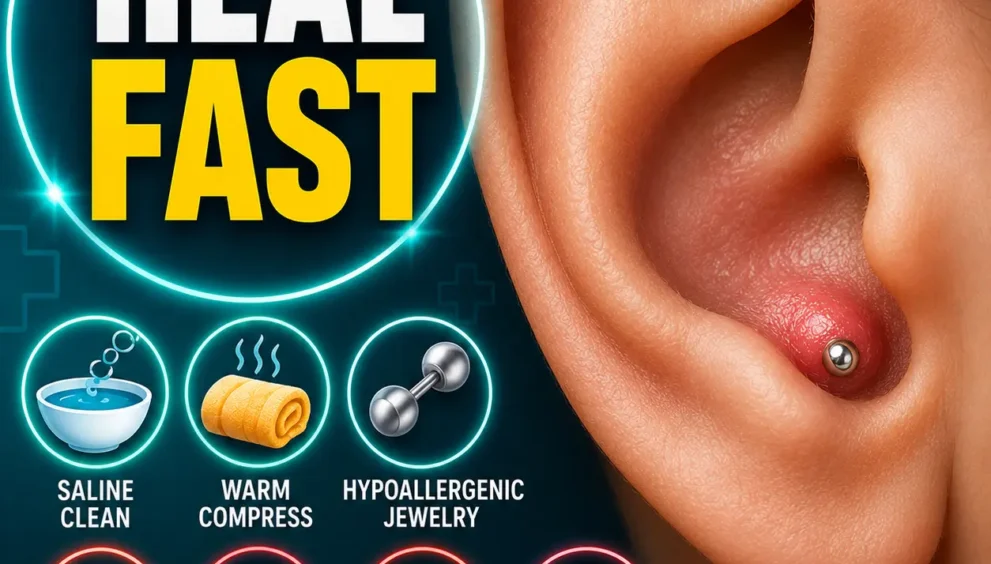
Understanding a Conch Piercing Bump
A conch piercing bump is a small swelling that appears around the inner or outer cartilage of the ear after getting a conch piercing. It is one of the most common issues people experience during healing. In most cases, it is not dangerous, but it can look uncomfortable and feel sensitive.
The bump usually forms because the ear cartilage reacts to pressure, irritation, or minor trauma. Since cartilage has low blood flow, it heals slowly, which makes it more sensitive compared to soft tissue like the earlobe. As a result, even small issues can trigger a visible bump.
A conch piercing bump can appear weeks or even months after piercing. Understanding its cause is the first step toward proper treatment and fast relief.
What Causes a Conch Piercing Bump?
There are several reasons why a bump may develop around a conch piercing. Most of them are related to irritation or improper healing conditions.
1. Physical Irritation
Touching, twisting, or sleeping on the piercing can irritate the skin. This constant pressure leads to swelling and bump formation.
2. Improper Jewelry
Low-quality jewelry or metal allergies (especially nickel) can trigger inflammation. This often results in a raised conch piercing bump along with itching or redness.
3. Infection Risk
If bacteria enter the piercing site, the body responds with swelling and fluid buildup. This can create a painful bump that may worsen over time.
4. Over-Cleaning
Excessive cleaning with strong solutions can also damage healing tissue. This leads to dryness and irritation, which may form a bump.
5. Trauma or Snagging
Hair pulling, headphone pressure, or accidental bumps can disturb the healing process and create localized swelling.
Understanding these causes helps you manage a conch piercing bump more effectively and avoid worsening the condition.
Types of Conch Piercing Bumps
Not all bumps are the same. Identifying the type helps choose the right treatment approach.
Hypertrophic Scar
This is a small, raised bump that stays within the piercing area. It is the most common type and usually improves over time with proper care.
Irritation Bump
This occurs due to external pressure or friction. It is soft, sometimes red, and often improves once the irritation is removed.
Granuloma
A granuloma is a fluid-filled bump that appears due to trapped healing fluid. It may look moist and slightly swollen.
Keloid Scar
A keloid is a thick scar that grows beyond the piercing site. It is less common and may require medical treatment.
A conch piercing bump is usually not a keloid. Most cases fall under irritation or hypertrophic scarring.
Symptoms You Should Watch For
A conch bump may show different symptoms depending on its cause.
Common signs include:
- Mild swelling around the piercing
- Redness or discoloration
- Tender or sore feeling
- Slight warmth in the area
- Small fluid discharge
While these symptoms are often part of the healing process, a bump that becomes increasingly painful, spreads beyond the piercing site, or starts producing yellow or green pus could indicate a more serious problem.
Understanding the early warning signs of a piercing infection can help you take the right steps before the condition worsens. You can learn more about these symptoms in this detailed guide on conch piercing infection signs.
Because cartilage piercings heal slowly, any conch piercing bump should be monitored carefully throughout the early healing phase to ensure proper recovery and avoid potential complications.
Fast Relief Tips for Conch Piercing Bump
Most bumps improve with consistent care. Here are effective relief methods:
1. Saline Cleaning
Use a sterile saline solution twice daily. This helps reduce bacteria and supports healing.
2. Warm Compress
Apply a warm saltwater compress for a few minutes daily. This improves blood circulation and reduces swelling.
3. Leave It Alone Method
Avoid touching, twisting, or moving the jewelry. The less you interfere, the faster it heals.
4. Use Hypoallergenic Jewelry
Titanium or surgical steel is recommended. It reduces allergic reactions and prevents bump formation.
5. Avoid Sleeping Pressure
Do not sleep directly on the affected ear. Use a travel pillow to avoid contact with the piercing.
These simple steps can significantly reduce a conch piercing bump over time.
What NOT to Do
Improper care can make the condition worse. Avoid the following:
- Do not use alcohol or hydrogen peroxide
- Do not pick or squeeze the bump
- Do not remove jewelry during an infection
- Do not over-clean the piercing
- Avoid swimming in pools or lakes during healing
Ignoring these warnings may worsen a conch piercing bump and slow down recovery.
Healing Time Expectations
Healing varies from person to person. Conch piercings typically take 6 to 12 months to fully heal. During this time, small bumps may appear and disappear.
Consistency is key. If proper care is followed, most conch piercing bumps reduce within a few weeks. Following healthy piercing care practices can further support healing and reduce irritation.
However, persistent or painful bumps may require professional evaluation.
When to See a Professional
You should seek medical or piercing expert advice if:
- The bump becomes increasingly painful
- There is yellow or green discharge
- Swelling spreads beyond the piercing
- You develop a fever or fatigue
- The bump does not improve after weeks of care
A professional can identify whether it is an infection, allergy, or scar tissue.
Prevention Tips for the Future
Preventing a conch piercing bump is easier than treating one.
Follow these tips:
- Choose a licensed piercer
- Use high-quality jewelry from the start
- Clean the piercing gently and consistently
- Avoid unnecessary touching
- Follow aftercare instructions strictly
Good habits during the first weeks make a big difference in healing success.
Final Thoughts
A conch piercing bump is a common but manageable issue. In most cases, it is caused by irritation, pressure, or slow healing of cartilage tissue. With proper care, patience, and the right cleaning routine, the bump usually reduces on its own.
The key is consistency and avoiding harmful habits that slow down healing. By following safe aftercare practices and understanding your body’s response, you can enjoy your conch piercing without long-term complications.