

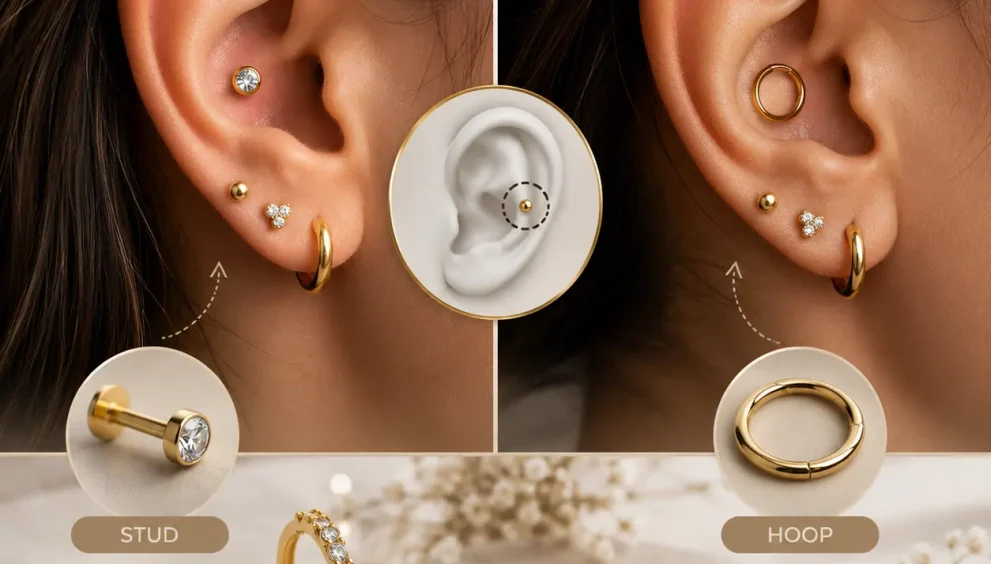
Conch Piercing Hoop vs Stud: Which Jewelry Is Better for Comfort, Healing, and Style?
Choosing the right jewelry for a Conch Piercing often becomes more confusing than choosing the piercing itself. Many people love the dramatic circular shape of a hoop, while others prefer the neat and secure look of a flat back stud. However, this decision is not only about appearance. The type of jewelry placed in the center cartilage affects healing speed, ear pressure, daily comfort, jewelry movement, and long-term wearability. Because the conch sits in a thicker cartilage zone, the wrong jewelry can create unnecessary irritation, while the right one supports a calmer healing phase and a cleaner overall look.
A hoop and a stud both work in conch anatomy, yet they perform differently once the piercing starts facing swelling, sleeping pressure, hair snagging, headphone friction, and seasonal sensitivity. Therefore, understanding where each jewelry type works best helps users avoid discomfort and choose based on real-life function rather than trend alone.
Why a Stud Is Usually the First Choice for a Fresh Conch Piercing
Professional piercers often begin a conch piercing with a flat back labret stud because this jewelry stays more stable during the early healing phase. A stud does not rotate around the cartilage as much as a ring does, which means the fistula experiences less internal movement. Since fresh cartilage already deals with tenderness, fluid buildup, and swelling, reduced jewelry rotation becomes extremely important, especially when you look at how cartilage recovery progresses over time.
In addition, a stud allows the back disc to sit flush against the ear, so cleaning saline around the area becomes easier. There is also less chance of hair wrapping around the jewelry post or clothing pulling the front gem. For users who sleep carefully or accidentally touch their ears often, this stable structure creates a lower irritation risk. As a result, many people notice fewer piercing bumps and less random soreness when they heal with a stud first.
Why Hoops Attract More Attention but Need More Patience
A conch hoop delivers the bold statement look that makes this piercing famous. Once the ring wraps around the outer ear curve, it gives a visible circular silhouette that feels more decorative than a simple stud. This is why many curated ear styles use hoops for a polished fashion finish. Nevertheless, beauty does not always mean convenience during the first months.
Unlike a flat back stud, a hoop moves every time the ear rubs a pillow, headphones slide over cartilage, or long hair catches the ring edge. This repeated motion can create micro-friction inside the piercing channel. Consequently, some users experience prolonged redness, delayed downsizing, or tenderness after accidental rotation. Hoops can still work beautifully, but they usually demand a healed or nearly healed conch before they feel comfortable enough for daily wear.
Daily Comfort: Which Jewelry Feels Easier in Real Life?
When comparing comfort, a stud usually wins in routine situations. The reason is simple: its front stays compact, and the back remains anchored. This design creates less protrusion, so side sleeping becomes slightly easier once the initial swelling settles. Similarly, users who wear over-ear headphones or masks often find that a flat stud causes less pressure against the ear bowl.
On the other hand, hoops create a raised loop around the conch. Although this looks elegant, it increases the chance of snagging on hair strands, scarves, towel fabric, and hoodie collars. Even a small accidental pull can send sharp pressure through cartilage. Therefore, active users, students, office workers with headsets, and people who move quickly through the day often describe studs as the more irritation-free wear.
Which Jewelry Looks Better on Different Conch Placements?
Not every conch anatomy behaves the same way. Inner conch piercings usually sit deeper in the cartilage bowl, and this placement naturally highlights gem studs, opals, or minimalist titanium tops. Because the jewelry sits centered, the clean stud design creates a refined focal point without overwhelming the ear.
Outer conch placements, however, often display hoops more dramatically because the ring can frame the outer shell of the ear. This gives a stronger visible arc and makes the piercing stand out from a distance. Even so, anatomy still matters. Some ears have tighter cartilage curves that make large ring diameter jewelry feel compressed.
In such cases, a stud remains the safer and more visually balanced option until sizing becomes clearer, particularly when the jewelry is selected in a low-irritation metal that supports sensitive cartilage. Titanium and other hypoallergenic materials usually help reduce unnecessary pressure and long-term reactivity, which is why many wearers spend time comparing the most comfortable conch jewelry metals for delicate ears before switching styles.
Healing Stage Matters More Than Personal Preference
Many users ask which piece of jewelry is better, but the answer depends on the healing stage. During the first months, cartilage pressure, swelling, room, and accidental touching all influence recovery. A stud supports this stage because it stays calmer. Once the piercing channel strengthens and tenderness decreases, users can safely explore hoop styles if they still want the circular look.
This means the debate is not always hoop versus stud forever. In many cases, the smarter progression is:
- stud during healing,
- hoop after full stabilization.
That sequence protects the piercing from unnecessary trauma while still allowing aesthetic freedom later. Skipping this progression often leads to recurring soreness that users mistakenly blame on aftercare rather than jewelry movement.
Seasonal and Lifestyle Differences Also Change the Best Choice
Jewelry comfort can shift with the weather and routine. During summer, sweat, loose hair, and frequent outdoor activity increase friction around the ear. Hoops tend to collect more movement in these conditions, especially when users wear sunglasses repeatedly. A stud generally feels lighter and cleaner in hot months because less metal sits around the outer rim.
During winter, scarves, knitted caps, and thicker clothing create more catching hazards. Here again, a protruding hoop may snag more easily than a flush flat back stud. Likewise, people who travel, work out, or use helmets often prefer stud jewelry year-round because it stays more protected against external contact.
Does Age Influence Hoop or Stud Preference?
Age does not decide healing biology dramatically, but it often changes the practicality. Younger wearers sometimes choose hoops for trend visibility and curated ear aesthetics, while mature users frequently lean toward minimalist studs for understated everyday wear. However, the more useful distinction is not age itself but patience level and maintenance habits.
Users willing to clean carefully, avoid sleeping pressure, and wait until the cartilage fully settles can eventually enjoy hoops without issue. Those who want lower maintenance, simpler cleaning, and stable long-term comfort usually remain loyal to flat back studs.
So, Which Jewelry Is Actually Better?
A stud is generally better for healing, comfort, stability, and low-irritation wear. It offers reduced jewelry rotation, easier saline cleaning, less snagging, and safer pressure control during the sensitive cartilage phase. For this reason, it remains the most practical starter jewelry and the best everyday option for users who prioritize convenience.
A hoop becomes better when the conch is fully healed, and the goal shifts toward a stronger visual style. It creates a more noticeable statement and can elevate the ear’s overall jewelry composition, yet it demands proper ring diameter, settled anatomy, and tolerance for occasional movement.
In practical terms, the best conch jewelry is not chosen by trend first. It is chosen by stage, anatomy, lifestyle, and comfort threshold. Users who understand this usually experience a smoother healing journey and a much better final piercing result.