

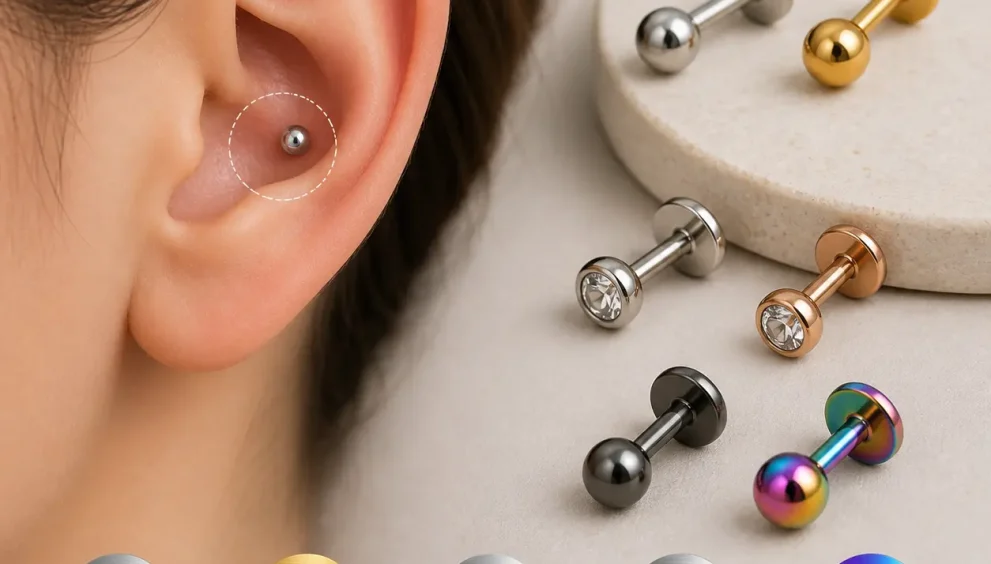
Conch Piercing: Choosing the Right Metal for Sensitive Ears
Selecting the best metal for Conch Piercing jewelry for sensitive ears is one of the most important decisions for safe healing, long-term comfort, and irritation-free wear. Conch Piercing sits in the cartilage, which heals more slowly than soft tissue, so the metal quality directly impacts recovery. If the wrong material is used, it can trigger redness, swelling, or prolonged discomfort. Therefore, understanding hypoallergenic metals is essential before choosing any jewelry.
Moreover, sensitive ears react quickly to low-quality alloys, especially those containing nickel. As a result, even stylish earrings can become problematic if the base metal is not skin-safe. This guide explores safe metals, their properties, and how each one performs for Conch Piercing comfort and healing success.
Hypoallergenic Safety in Conch Piercing Jewelry
The foundation of safe Conch Piercing jewelry for sensitive ears is hypoallergenic material selection. Hypoallergenic metals reduce the risk of allergic reactions by minimizing or eliminating nickel exposure. In most cases, irritation occurs when cheap alloys interact with skin moisture, causing inflammation over time.
Additionally, skin sensitivity can develop unexpectedly. Even if you previously tolerated certain metals, prolonged exposure can increase sensitivity. Therefore, selecting biocompatible materials ensures long-term ear safety. Many people also explore high-quality conch piercing jewelry options to ensure they choose metals that are safe for sensitive ears. Titanium, gold, and platinum remain the most recommended options because they are stable and non-reactive.
Furthermore, hypoallergenic jewelry supports smoother healing by reducing external stress on pierced tissue. This makes recovery faster and significantly more comfortable for users with sensitive skin conditions.
Titanium: The Safest Metal for Conch Piercing Healing
Titanium is widely considered one of the safest options for Conch Piercing jewelry for sensitive ears. It is lightweight, corrosion-resistant, and completely nickel-free in medical-grade form. Because of its biocompatibility, it is frequently used in surgical implants.
In addition, titanium does not react with moisture or oxygen, which prevents tarnishing and skin irritation. This makes it ideal for long-term wear, especially during the healing phase of cartilage piercings. Its smooth surface also minimizes friction, reducing pressure on the piercing site.
Moreover, titanium is extremely durable yet comfortable. Unlike heavier metals, it does not pull on the ear, which helps maintain proper alignment of the piercing during healing. As a result, titanium is often the first recommendation for beginners with sensitive ears.
Gold: A Premium Choice for Sensitive Ear Conch Piercing
Gold is another strong option for Conch Piercing jewelry for sensitive ears, but purity matters significantly. High-karat gold, such as 14K or 18K, is generally safe because it contains fewer alloy metals. However, lower karat gold may include nickel or other irritants.
Additionally, solid gold is preferred over gold-plated jewelry. Plated layers can wear off over time, exposing base metals that may trigger allergic reactions. Therefore, solid gold provides a more stable and long-lasting solution for sensitive ears.
Furthermore, gold offers both aesthetic and functional value. It maintains a smooth surface, resists corrosion, and provides a luxurious appearance. As a result, many users choose gold for both healed and partially healed Conch Piercings.
Platinum: The Most Stable Metal for Conch Piercing Jewelry
Platinum is often considered the highest-quality metal for Conch Piercing jewelry for sensitive ears. It is chemically inert, meaning it does not react with skin or environmental factors. This makes it extremely safe for even highly sensitive individuals.
In addition, platinum is dense and durable, which ensures long-term structural stability. It does not tarnish, fade, or corrode, making it ideal for permanent wear. Because of its purity, it rarely contains allergens like nickel or cobalt.
Moreover, platinum provides exceptional comfort during healing. Its smooth texture reduces irritation risk, allowing the piercing to settle naturally. Although it is more expensive than other metals, its safety and durability justify the investment.
Surgical Steel: A Budget-Friendly but Conditional Option
Surgical steel is commonly used in Conch Piercing jewelry, but it requires caution. While it is corrosion-resistant and widely available, it may still contain trace amounts of nickel.
In addition, not all surgical steel is equal. Grades like 316L are considered safer, but individuals with severe metal allergies may still experience irritation. Therefore, it is better suited for mildly sensitive ears rather than extreme sensitivity cases.
Moreover, surgical steel is affordable and durable, making it a popular choice for initial piercings. However, careful evaluation is necessary before long-term use, especially for cartilage piercings like the conch.
Niobium: A Lesser-Known but Highly Safe Metal Option
Niobium is an underrated choice for Conch Piercing. It is naturally hypoallergenic and does not require plating or coating. This ensures a pure surface that rarely causes allergic reactions.
Additionally, niobium can be anodized into different colors without chemical coatings, making it both safe and visually appealing. It is also highly resistant to corrosion, which supports long-term skin compatibility.
Furthermore, niobium is slightly softer than titanium, which allows easy shaping into comfortable jewelry designs. As a result, it is an excellent alternative for users seeking variety without compromising safety.
Metals to Avoid in Conch Piercing Jewelry
Choosing the wrong metal can significantly impact healing. Low-quality alloys, nickel-based metals, and plated jewelry are the most common causes of irritation in Conch Piercing jewelry for sensitive ears.
In addition, gold-plated and silver-plated accessories may look attractive but often expose base metals over time. This increases the risk of allergic reactions and delayed healing. Many of these irritation issues are explained in detail in common conch piercing problems and simple ways to fix them, helping readers understand what usually goes wrong during healing.
Therefore, it is essential to avoid unknown metal compositions and always prioritize certified hypoallergenic materials.
Healing and Comfort Factors Beyond Metal Choice
Although metal selection is critical, overall Conch Piercing comfort also depends on jewelry design. Flat-back studs, smooth edges, and lightweight structures reduce pressure on cartilage.
Moreover, proper cleaning and aftercare improve healing outcomes. Keeping the piercing clean prevents bacterial buildup, which can worsen irritation. As a result, combining safe metals with good hygiene practices ensures optimal recovery.
Additionally, avoiding frequent jewelry changes during healing helps maintain stability and reduces trauma to the piercing site.
Final Thoughts on Best Metal for Conch Piercing Jewelry
Ultimately, the best metal for Conch Piercing jewelry for sensitive ears depends on skin sensitivity, budget, and healing stage. Titanium and platinum remain the safest choices, while high-karat gold offers a premium alternative. Surgical steel and niobium can also work when chosen carefully.
Therefore, understanding metal properties is essential for making informed decisions. By selecting hypoallergenic materials and avoiding reactive alloys, you can ensure a smooth healing journey and long-term comfort.