
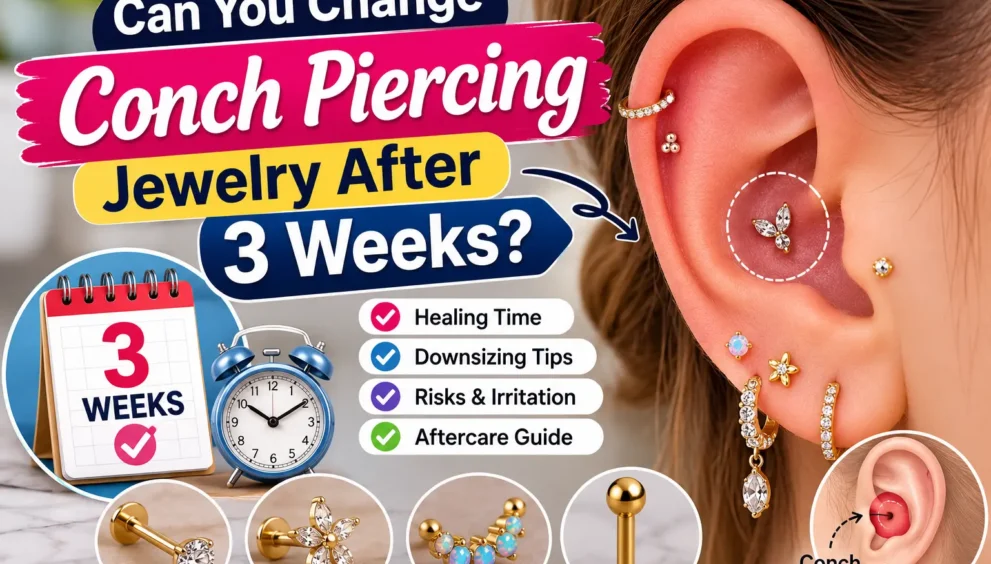
Can You Change Conch Piercing Jewelry?
A conch piercing is one of the most stylish cartilage piercings, but it also requires patience during the healing process. Many people start wondering whether they can change their conch piercing jewelry after only three weeks, especially when the initial jewelry feels too long, looks bulky, or no longer matches their style.
The short answer is that most people should avoid changing conch piercing jewelry after three weeks unless a professional piercer recommends a downsizing. While every piercing heals differently, cartilage piercings generally take much longer to heal than earlobe piercings. Therefore, changing jewelry too early can create unnecessary complications.
Understanding the Healing Stage of a New Conch Piercing
Before deciding whether to change your jewelry, it is important to understand how a conch piercing heals. Unlike soft tissue piercings, a conch piercing passes through cartilage. Cartilage has a lower blood supply, which means healing takes longer and requires extra care.
Choosing healing-friendly jewelry options during this period can also help minimize irritation and support a smoother recovery process.
Typical healing stages include:
| Healing Stage | What Happens |
|---|---|
| Weeks 1–4 | Initial swelling, tenderness, and crust formation |
| Months 1–3 | Internal healing begins but remains fragile |
| Months 3–6 | Reduced sensitivity and gradual strengthening |
| Months 6–12 | Full healing for most individuals |
Even if your piercing looks healthy after three weeks, the internal tissue is usually still healing.
Is It Safe to Change Conch Jewelry After 3 Weeks?
In most cases, no.
Three weeks is considered early for changing jewelry on a healing conch piercing. The piercing channel is still developing, and removing jewelry can irritate the area.
However, there is one important exception: professional downsizing.
Piercers often use a longer post initially to accommodate swelling. Once swelling decreases, a shorter post may be installed by a professional to prevent movement and snagging.
A downsizing appointment is different from a decorative jewelry change. The goal is to improve healing rather than alter appearance.
Therefore, if a qualified piercer examines your ear and determines that swelling has resolved, they may recommend downsizing around three to six weeks.
Why Some People Successfully Downsize at Three Weeks
Many piercing enthusiasts report successful downsizing after three weeks without complications.
This usually happens when:
- Swelling was minimal.
- The piercing showed no signs of infection.
- The jewelry was excessively long.
- A professional piercer performed the change.
- Proper aftercare continued afterward.
Even then, slight irritation for a day or two is common because the piercing experiences temporary trauma during the jewelry change.
As a result, mild soreness does not automatically mean something has gone wrong.
Potential Risks of Changing Jewelry Too Early
Although some people have positive experiences, changing jewelry prematurely still carries risks.
Irritation and Swelling
The most common issue is irritation.
When jewelry is removed and reinserted, the healing tissue can become inflamed. This may lead to:
- Increased redness
- Mild pain
- Temporary swelling
- Warmth around the piercing
Fortunately, these symptoms often improve within a few days if the piercing remains healthy.
Irritation Bumps
Many people develop piercing irritation bumps after unnecessary jewelry changes.
These bumps are not always infections. Instead, they are often caused by:
- Excessive movement
- Pressure
- Jewelry friction
- Accidental trauma
Keeping the area clean and minimizing disturbance usually helps reduce irritation.
Delayed Swelling
One concern that many piercers discuss is delayed swelling.
Unlike lobe piercings, cartilage piercings sometimes swell weeks after the initial piercing. A shorter post may become uncomfortable if delayed swelling occurs.
For this reason, many professionals recommend monitoring the piercing carefully after downsizing.
Signs Your Conch Piercing May Be Ready for Downsizing
Not every piercing heals at the same rate.
Your conch piercing may be ready for professional downsizing if:
- Initial swelling has completely subsided.
- The jewelry feels excessively long.
- The piercing is not painful.
- There is no unusual discharge.
- The area appears calm and stable.
However, you should avoid changing jewelry if you notice:
- Significant swelling
- Persistent pain
- Yellow or green discharge
- Excessive redness
- Heat around the piercing
When these symptoms appear, healing should remain the priority.
What Happens If You Change Jewelry Yourself?
Many people attempt to change jewelry at home because they feel their piercing looks healed.
Unfortunately, appearances can be misleading.
Changing jewelry yourself may:
- Introduce bacteria
- Damage healing tissue
- Cause bleeding
- Trigger swelling
- Extend healing time
Therefore, professional assistance is usually the safest option during the first few months.
Best Jewelry Materials for a Healing Conch Piercing
If a jewelry change becomes necessary, material selection matters.
High-quality materials reduce irritation and support healing.
Recommended options include:
- Implant-grade titanium
- Solid 14k or 18k gold
- Niobium
- Implant-grade surgical steel
Avoid low-quality metals that may contain nickel or other irritating substances.
Additionally, threaded or threadless flat-back labrets are commonly preferred because they remain secure and comfortable during healing.
How to Care for Your Conch Piercing After a Jewelry Change
After downsizing or changing jewelry, continue following proper aftercare practices.
Do:
- Rinse with sterile saline solution.
- Allow water to run over the piercing during showers.
- Sleep on the opposite side.
- Keep hair and headphones away from the piercing.
- Wash hands before touching the area.
Don’t:
- Rotate the jewelry.
- Use alcohol or hydrogen peroxide.
- Over-clean the piercing.
- Pick off crusties.
- Change jewelry repeatedly.
Consistency is often more important than complicated aftercare routines.
Final Thoughts
So, can you change conch piercing jewelry after three weeks?
For most people, a full jewelry change for style purposes is still too early. However, a professional downsizing may be appropriate if swelling has resolved and the piercing is healing well.
The key is understanding that a conch piercing may look healthy on the outside while still healing internally. Therefore, patience remains one of the most important parts of the healing process.
If you are unsure whether your piercing is ready, consult an experienced piercer before making any changes. Waiting a little longer is often better than risking irritation, swelling, or delayed healing.