

Holiday Party Schedule Ideas for Smooth Event Flow
A holiday party becomes easier to enjoy when the schedule feels clear, natural, and relaxed. Guests do not need to know every detail, but the host should understand how the event will move from arrival to farewell. That is why holiday party schedule ideas are important for smooth event flow.
A good schedule helps prevent confusion, long waiting times, rushed activities, and awkward gaps. It also helps the host stay calm because every main moment already has a place. With the right plan, food, games, guest greetings, and closing moments can work together without stress.
Why Holiday Party Schedule Ideas Matter
Holiday party schedule ideas help turn a simple gathering into a better guest experience. Without a schedule, guests may arrive with no clear direction. Food may come too early or too late. Activities may feel forced. In addition, guests may leave before the main moments happen.
A schedule does not mean the party should feel strict. Instead, it gives the event a soft structure. It guides the flow while still leaving room for conversation, laughter, and small changes.
A smooth schedule helps with:
Guest arrival
Food timing
Seating comfort
Group activities
Gift exchange
Entertainment
Photo moments
Farewell gifts
When these parts are planned in order, the party feels easier and more enjoyable for everyone.
Start with the Main Purpose of the Party
Before creating a schedule, decide what the party is really about. Is it a family gathering, office celebration, friends’ night, dinner party, or simple holiday get-together? Each type of party needs a different flow.
For example, a family party may need more time for casual talking and simple activities. An office party may need a welcome moment, recognition, food service, and group interaction. A friend’s party may feel better with games and relaxed snack breaks.
Once you know the purpose, the schedule becomes easier to build. Every activity should support the mood of the event.
Plan Guest Arrival and Welcome Time
The first 20 to 30 minutes matter a lot. This is when guests enter, settle in, greet others, and understand the atmosphere.
A simple welcome period can include:
Light snacks
A warm greeting
A place for coats or bags
Simple seating guidance
A welcome drink or warm beverage
Do not start the main activity as soon as the first guests arrive. Some people may come a little late. Therefore, keep the opening flexible and comfortable.
This time also helps guests feel included before the main schedule begins, which supports effective guest management tips throughout the event.
Create a Simple Opening Moment
After most guests arrive, add a short opening moment. This does not need to be formal. A few kind words from the host can set the tone.
You can say thank you, explain the party flow, or welcome everyone to enjoy the evening. For office or group events, this is also a good time to recognize effort, teamwork, or shared memories.
Keep this part short. Guests appreciate warmth, but they do not want a long speech at the start of a relaxed holiday event.
Schedule Food at the Right Time
Food timing can affect the whole party. If food comes too early, guests may not be ready. If it comes too late, people may feel uncomfortable.
For a two- to three-hour party, serve the main food after the welcome period and opening moment. This gives guests time to arrive, talk, and settle.
A good food flow may look like this:
First 20 minutes: light snacks
After 30 to 45 minutes: main food
Later: dessert or warm treats
Near the end: take-home favors or small sweets
Also, make sure food stations or serving areas do not block guest movement. Smooth flow matters just as much as the menu.
Add Activities Without Overloading the Party
Activities can make a holiday party memorable, but too many activities can make the event feel busy. Choose one or two main activities and place them at the right time.
Good holiday activities include:
Gift exchange
Photo booth
Holiday trivia
Simple team games
DIY ornament table
Memory-sharing cards
Group toast
Small prize activity
Place activities after guests have eaten or settled in. At that point, people feel more relaxed and ready to participate.
Also, keep activities optional when possible. Some guests enjoy games, while others prefer conversation. A good schedule gives space for both.
Keep Time for Natural Conversation
A common mistake is filling every minute with planned moments. Holiday parties need breathing room. Guests often enjoy the simple parts most, such as talking, laughing, taking photos, and sharing food.
Add open social time between major parts of the event. This keeps the party from feeling rushed.
For example:
Welcome time
Opening words
Food
Social break
Activity
Dessert
Closing moment
This flow feels natural because it balances structure and freedom.
Plan Entertainment Around the Mood
Entertainment should support the party instead of taking over the whole schedule. games, photo areas, and small performances can work well when they match the event style.
For a cozy gathering, a simple photo corner may be enough. For a larger party, you may include a playlist, group game, or short entertainment segment.
Use a Run-of-Show for Better Organization
A run-of-show is a simple event timeline for the host. It lists what happens and when. Guests do not need to see it, but the host can use it to stay organized.
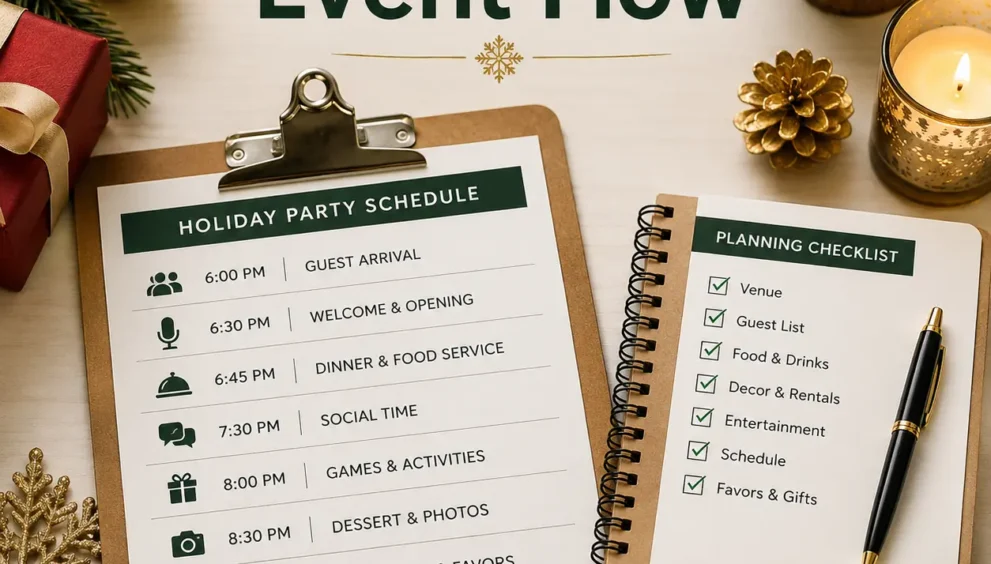
A basic holiday party run-of-show may look like this:
6:00 PM – Guest arrival and welcome
6:30 PM – Short host welcome
6:40 PM – Main food service
7:15 PM – Open social time
7:45 PM – Game or gift exchange
8:15 PM – Dessert and photos
8:45 PM – Thank you message and favors
9:00 PM – Party ends
This schedule is simple, but it gives the event a smooth direction.
Prepare for Small Delays
Even the best schedule needs flexibility. Guests may arrive late, food may take longer, or an activity may finish early. Therefore, build small buffers between major moments.
A 10- to 15-minute buffer can make the event feel relaxed. It also helps the host adjust without stress.
For example, if dinner starts 10 minutes late, the whole party should not feel ruined. A flexible plan keeps everything comfortable.
End the Party with a Thoughtful Closing
The ending matters because it leaves the final impression. Do not let the party fade out awkwardly. Instead, create a simple closing moment.
You can thank guests, offer party favors, share dessert, or invite everyone to take a final photo.
This gives the event a warm ending and supports quick party planning when you are short on time.
Good closing ideas include:
Thank you favors near the exit
A final group photo
A short farewell message
Small wrapped treats
Guests should leave feeling appreciated, not rushed.
Common Scheduling Mistakes to Avoid
Some schedule mistakes can make a party feel stressful. Fortunately, they are easy to avoid with planning.
Avoid these mistakes:
Starting activities too early
Serving food too late
Planning too many games
Forgetting the arrival time
Leaving no social breaks
Making speeches too long
Ignoring guest comfort
Ending without a closing moment
A smooth event does not need many complicated parts. It only needs the right order, enough time, and a clear flow.
Final Thoughts
A good holiday party schedule helps the whole event feel calm, organized, and enjoyable. It gives guests time to arrive, connect, eat, participate, and leave with a positive memory.
The best holiday party schedule ideas focus on balance. Plan enough structure to guide the event, but leave enough space for natural moments. When the flow feels easy, guests relax, hosts feel confident, and the celebration becomes more memorable.