



Istikhara for Marriage: When, How, and What Result to Expect

Istikhara for Marriage: When, How, and What Result to Expect
Marriage is one of the most significant decisions a person can make in their life. Islam, being a complete way of life, provides clear guidance on how to approach such critical matters. Two key principles taught by Islam for decision-making are Istikhara Dua (seeking guidance from Allah) and Shura (consultation). This article provides a correct Islamic understanding of Istikhara for marriage, including when and how to perform it, and what kind of result one can expect—based entirely on authentic Islamic teachings highlighted in the provided material.
What Is Istikhara in Islam?
The word Istikharaoriginates from the Arabic root khayr, meaning “goodness.” Istikhara literally means asking Allah to choose what is best for you. In Islamic understanding, Istikhara is not a method to gain hidden knowledge of the future, nor is it meant to replace effort or consultation.
Istikhara is performed when a matter is permissible (halal), and a person feels uncertain about which option is better. Marriage clearly falls into this category, as it deeply affects one’s religion, worldly life, and future.
Matters for Which Istikhara Is Performed?
According to Islamic teachings :
- Istikhara is not performed for obligatory (farḍ) acts like prayer or fasting.
- It is also not done for clearly prohibited (ḥarām) matters.
- Istikhara is performed for permissible matters where a person is undecided, such as:
- Marriage proposals
- Business decisions
- Travel or relocation
- Marriage proposals
Marriage decisions are among the most common reasons people turn to Istikhara.
The Correct Method of Performing Istikhara
The authentic method of Istikhara is clearly mentioned in Ṣaḥīḥ al-Bukhārī.
Hadith Reference
Narrated by Jabir ibn Abdullah (RA):
The Messenger of Allah ﷺ used to teach us Istikhara in all matters just as he taught us a chapter of the Qur’an. He said:
“When any one of you intends to undertake a matter, let him pray two rak‘ahs of non-obligatory prayer and then say the Istikhara supplication…”
(Ṣaḥīḥ al-Bukhārī, Hadith no. 1166)
Steps:
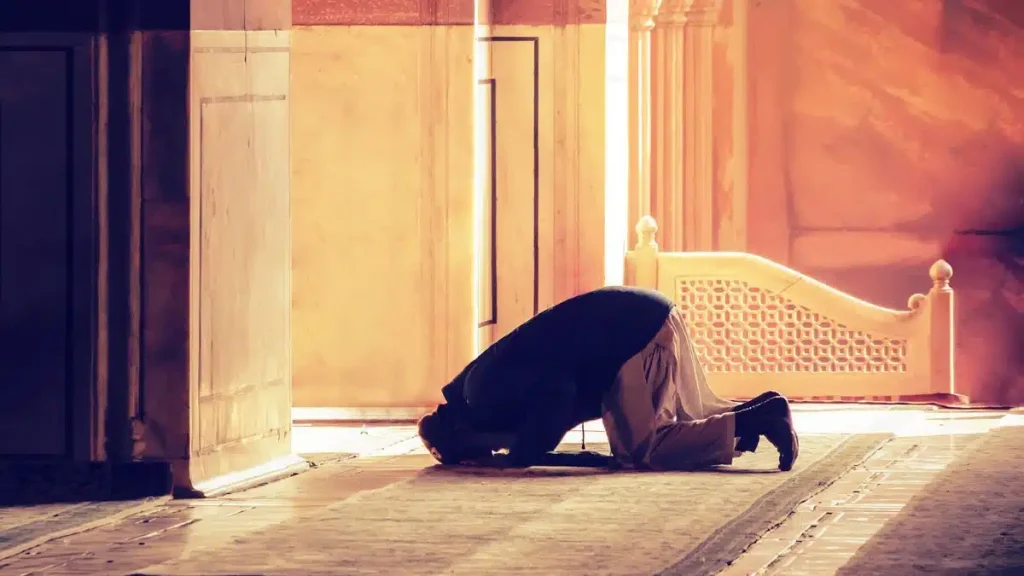
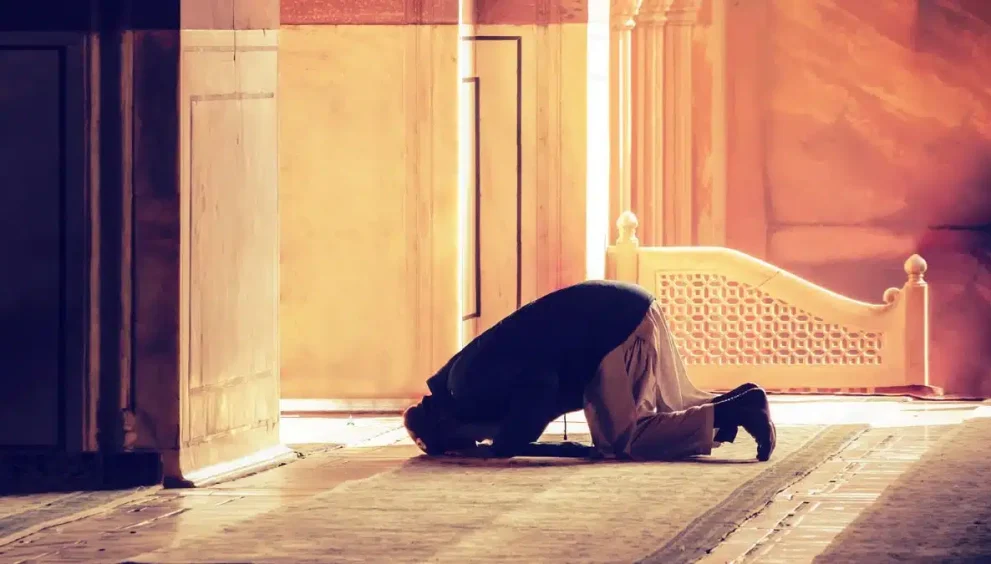
- Perform two rak‘ahs of voluntary prayer (not farḍ).
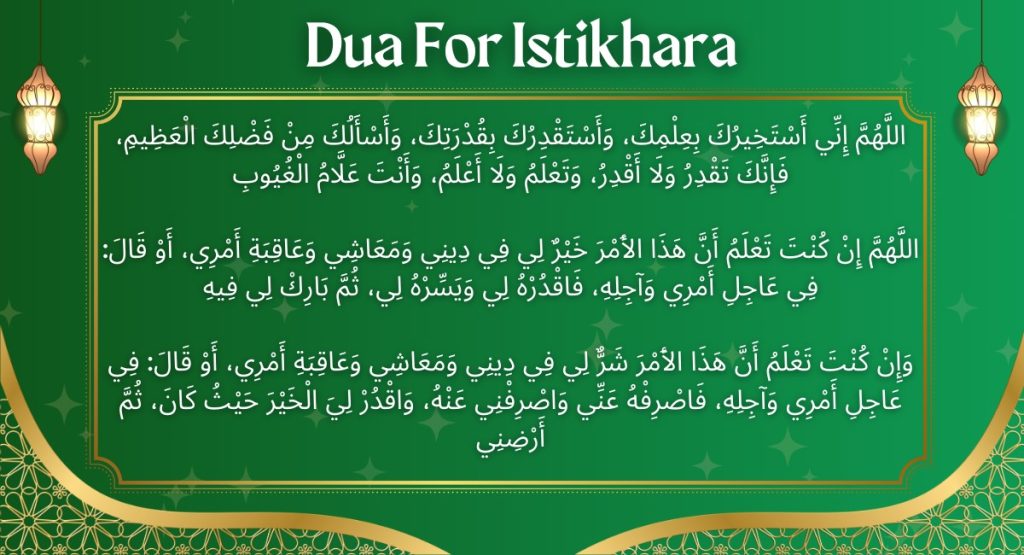
- After the prayer, recite the Dua of Istikhara.
- Mention the specific matter (e.g., marriage to a particular person).
- Place full trust in Allah.
Common Misconceptions About Istikhara
One of the most important clarifications in the provided material is that Istikhara is often misunderstood.
Istikhara Is NOT:
- Seeing a dream in white or green
- Receiving a supernatural sign
- Feeling instant emotional happiness or sadness
- Someone else is performing Istikhara on your behalf as a final decision-maker
There is no authentic evidence that dreams are a necessary or guaranteed result of Istikhara.

What Result Should One Expect from Istikhara?
According to authentic Islamic understanding, Istikhara is accepted when Allah creates ease, clarity, or inclination toward a decision, or removes obstacles from the harmful option.
This may appear in different ways:
- The matter becomes easier to pursue
- The heart feels naturally inclined toward one option
- Unexpected obstacles block the harmful path
- Circumstances change without force
This is Allah’s guidance—not emotional excitement or mystical signs.
The Importance of Shura (Consultation)
Islam does not teach Istikhara in isolation. Consultation (Shura) is equally important.
Qur’an Reference:
Allah says:
“And consult them in matters.”
(Surah Aal-e-Imran 3:159)
And:
“And their affairs are conducted by mutual consultation.”
(Surah Ash-Shura 42:38)
This proves that:
- The Prophet ﷺ himself practiced consultation
- Seeking advice does not contradict trust in Allah
- Istikhara should come after gathering information and consulting wise people
Whom Should You Consult for Marriage?
Based on the Islamic principles mentioned in the text:
- Parents
- Guardians
- Knowledgeable elders
- Trustworthy scholars
- People who understand character and compatibility
Consultation helps you assess factors like:
- Religious commitment
- Character
- Family compatibility
- Practical concerns
After this, Istikhara is performed to seek Allah’s blessing and guidance.
Can Istikhara and Shura Be Done Together?
Yes—and they should be done together.
Correct sequence:
- Gather information
- Consult reliable people
- Perform Istikhara
- Move forward with trust in Allah
This balanced approach reflects the Sunnah of the Prophet ﷺ.

Repeating Istikhara
It is permissible to repeat Istikhara if uncertainty remains. However:
- There is no fixed number
- Obsession or delay due to fear should be avoided
- Once clarity and ease appear, a person should proceed
Islam encourages decisiveness along with reliance on Allah.
FAQ’s About Istikhara Dua
1. Is it necessary to sleep after performing Istikhara and wait for a dream?
Answer:
No, a person does not need to sleep after performing Istikhara, and Allah does not require guidance to come througha dream. There is no authentic Qur’anic verse or Hadith that states that Istikhara must result in a dream.
According to the authentic method taught by the Prophet ﷺ, Istikhara means asking Allah for goodness. The result of Istikhara appears through ease, clarity, inclination of the heart, or removal of obstacles, not necessarily through dreams.
(Reference: Sahih al-Bukhari, Hadith 1166)
If I do Istikhara for marriage or any decision, will Allah surely guide me to what is best?
Answer:
Yes. When a person performs Istikhara correctly, with sincerity and trust in Allah, Allah guides them toward what is best for their religion and worldly life.
Guidance may come in different forms:
- The heart becomes inclined toward one option
- The path becomes easy and smooth
- Harmful options slowly fade away
- Unexpected obstacles block what is not good
This is the real outcome of Istikhara, as explained in authentic Islamic teachings.
True that seeing red color in a dream means bad, and green color means good, after Istikhara?
Answer:
No, this belief is a common myth and has no Shar‘i (Islamic) basis. Islam does not teach that colors in dreams—such as red or green—determine whether a decision is good or bad.
There is no authentic Hadith or Qur’anic evidence that links colors in dreams to the acceptance or rejection of Istikhara. Such interpretations come from cultural assumptions, not Islamic teachings.
True guidance comes from Allah through practical outcomes, not symbolic colors.
What sign shows that Allah has accepted the Istikhara?
Answer:
The correct sign of Istikhara acceptance is not a dream, but rather:
- Inner peace and confidence toward a decision
- Ease in moving forward
- Removal of confusion
- Barriers to harmful choices
As explained by scholars, when Allah chooses what is better, He either opens the path or closes it in a way that protects the person.
The meaning of the Istikhara supplication itself clearly supports this understanding.
Is it better to perform Istikhara myself or ask someone else to do it for me?
Answer:
It is better and more beneficial to perform Istikhara yourself. Istikhara is an act of worship that builds a direct connection between the servant and Allah.
Since it is your decision and your life, your sincerity, need, and dependence on Allah are stronger. The closer a person turns to Allah personally, the more benefit they receive.
There is no authentic evidence that someone else’s Istikhara replaces your own responsibility.
Should a person perform Istikhara alone, or should they also seek consultation at the same time?
Answer:
A person should perform Istikhara along with consultation (Shura), not use it as a replacement.
Allah commands consultation in the Qur’an:
- (Qur’an 3:159 – Surah Aal-e-Imran)
- (Qur’an 42:38 – Surah Ash-Shura)
The correct approach is:
- Gather information
- Consult trustworthy people
- Perform Istikhara
- Trust Allah and proceed
This balanced method was practiced by the Prophet ﷺ himself.
Final Thoughts on Istikhara for Marriage
Istikhara Dua is a powerful act of worship, not a shortcut to certainty without effort. When done correctly, it strengthens faith, removes confusion, and aligns one’s decision with divine wisdom.
A person should approach marriage decisions with:
- Knowledge
- Consultation
- Prayer
- Trust in Allah
When these elements come together, Istikhara becomes a source of peace, not confusion.